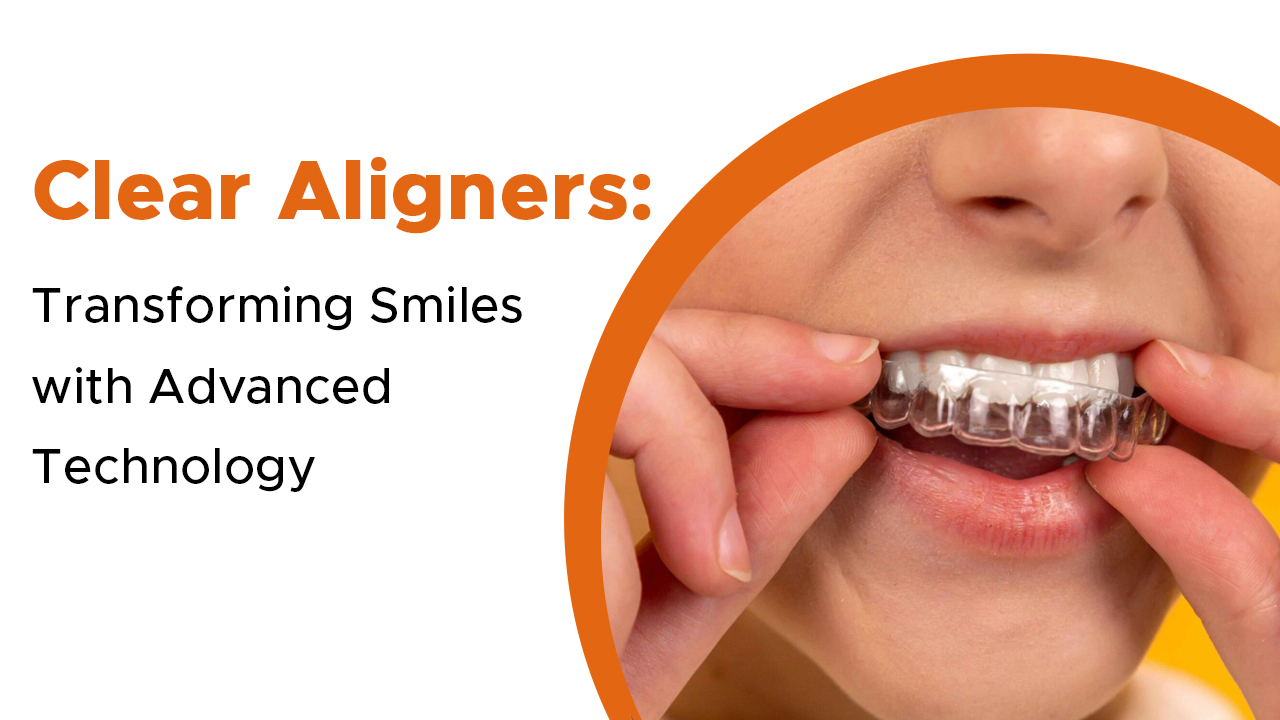
Many people want straighter teeth but do not want metal braces showing in office meetings, college photos, family functions, or daily conversations. They also worry about whether clear aligners can really fix crowding, gaps, or bite issues in a predictable way. Clear aligners solve this by using custom-made, removable trays that move teeth in small planned stages with digital precision.
At Eledent Dental Hospitals, aligner care is backed by 19+ years of clinical experience, 30,000+ smiles restored, and 5 locations across Hyderabad for easier reviews and follow-ups. This blog is written by an expert dentist from Eledent Dental Hospitals.
Read on to understand how aligners work, what technology makes them more precise, who they suit best, and when fixed braces may still be the better option.
How Do Clear Aligners Transform Your Smile?
Clear dental aligners transformed your smile by applying gentle, calculated force that moves teeth into better positions over time.
How clear aligners can improve your teeth alignment:
- Mild to moderate crowding where teeth overlap.
- Small to moderate gaps between teeth.
- Relapse after old braces when teeth have shifted again.
- Selected overbite, crossbite, or mild bite imbalance cases.
- Smile symmetry where tooth positions need controlled correction.
Each aligner is slightly different from the other. That small difference is what creates movement of teeth. In most systems, one tray is worn for 7 to 14 days before shifting to the next stage. Each stage moves teeth by a fraction of a millimetre, which keeps the correction controlled rather than aggressive. This staged movement can improve mild to moderate crowding, close smaller spaces, and correct selected bite problems.
The smile change is not only visual. When crowded teeth are aligned better, brushing reaches more surfaces and floss can pass more normally between teeth. That reduces areas where plaque tends to sit for long periods. If the bite becomes more balanced, it can also reduce uneven enamel wear on overloaded teeth.
That is why many adults consider invisalign treatment in Hyderabad when they want straighter teeth without a visibly metal look.
What Advanced Technology Makes Clear Aligner Treatment More Accurate And Predictable?
Advanced technology improves clear aligner treatment by making diagnosis, planning, fit, and follow-up more precise.
Aligners are only as good as the plan behind them. A clear tray without good planning is just plastic. The real accuracy comes from digital systems that map the teeth, bite, and planned movement before treatment begins.
| Technology | Clinical Value |
|---|---|
| Intraoral digital scanning | Builds a detailed 3D model with fewer impression errors. |
| 3D treatment simulation | Maps movement stage by stage before the first tray is made. |
| CBCT in selected cases | Helps assess roots, bone limits, and movement safety. |
| Advanced aligner material | Delivers steadier force across each wear cycle. |
| Attachments and bite features | Improve control over rotations, extrusion, and bite correction. |
The first major shift is digital scanning. Intraoral scanners capture a 3D model of the teeth and bite without putty impressions. That reduces distortion and gives better detail of tooth shape, angulation, and contact points. In selected cases, CBCT adds more depth because it shows roots and surrounding bone, which matters when movements need more safety control.
The second major shift is digital treatment simulation. This lets the dentist break movement into stages instead of guessing how teeth may respond. Attachments, bite features, and aligner modifications can then be placed more intelligently. At Eledent Dental Hospitals, the digital workflow includes intraoral scanning and in-house CBCT support, which helps turn smile correction into a more planned and measurable process. For patients comparing invisalign treatment in Kondapur, this kind of digital planning can make treatment easier to understand before it even starts.
How Does Invisalign Treatment Work Step By Step?
Invisalign treatment works through diagnosis, digital planning, custom tray wear, review visits, and retainers after the active phase ends.
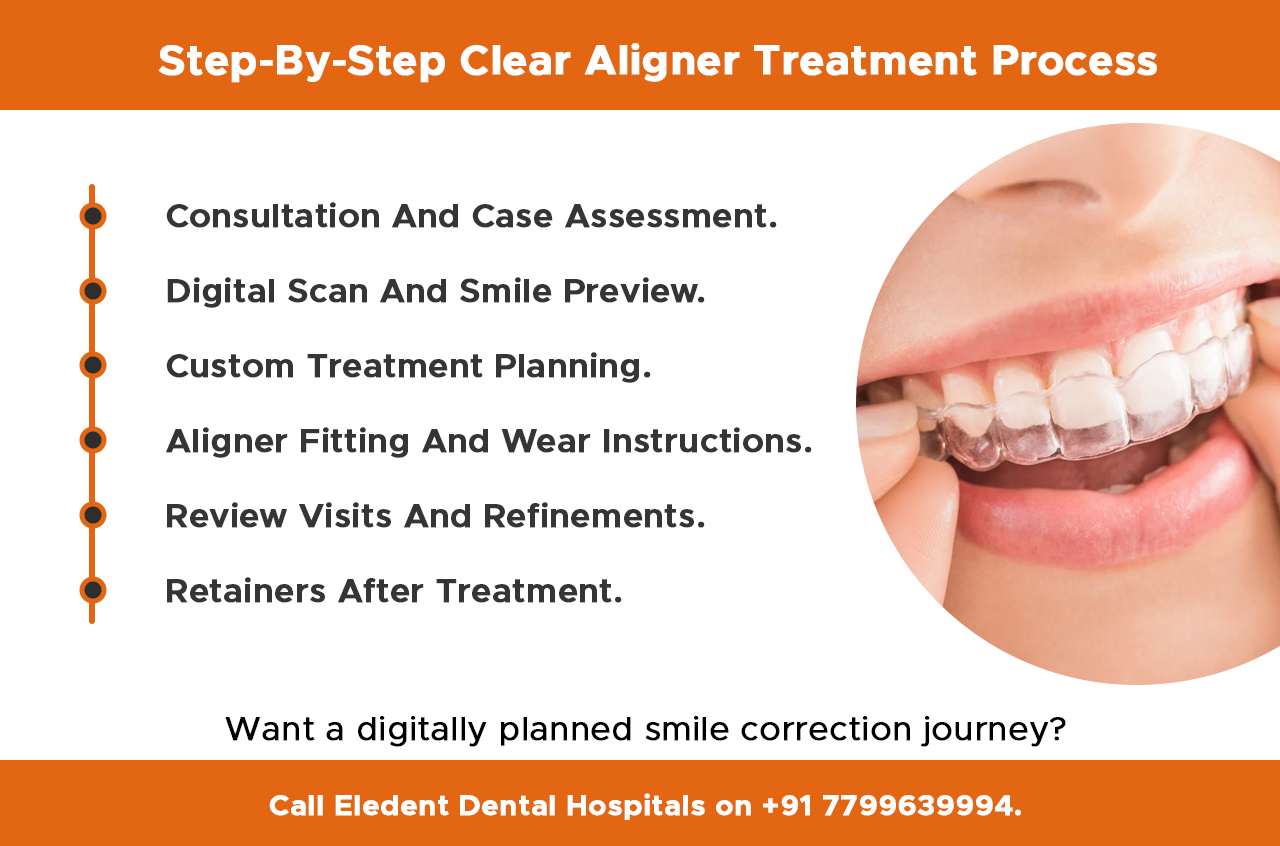
Consultation and Assessment
The first step is to decide whether the case is suitable for aligners.
The dentist checks crowding, spacing, bite relationship, gum health, enamel condition, and whether any fillings, extractions, or cleaning are needed. Photos and bite records may also be taken so the starting condition is documented properly.
Digital Scan and Smile Preview
A digital scan creates a 3D model of the teeth and bite.
This model is used to study alignment from multiple angles. In many cases, patients also get a visual smile preview. That helps them see the direction of movement rather than starting treatment blindly.
Custom Treatment Planning
The dentist plans each tooth movement in sequence.
That means deciding which teeth move first, how much movement is safe per stage, where attachments may be needed, and whether the bite needs extra features such as bite ramps or precision cuts.
Aligner Fabrication and Fitting
A series of custom aligners is made from the approved digital plan.
At the fitting visit, the dentist checks tray seating, comfort, retention, and whether attachments need to be bonded. If attachments are placed, they are usually small and tooth-coloured.
Active Wear and Tray Changes
Each aligner is usually worn for 20 to 22 hours a day.
Patients remove trays only for meals, drinks other than water, brushing, and flossing. Most cases shift to the next set every 7 to 14 days. If trays are worn casually, the next tray may feel too tight or may not seat fully.
Review Visits and Refinements
Review appointments check whether teeth are tracking properly.
These visits are often scheduled every 6 to 8 weeks, depending on the plan. If a few teeth need more detailing near the end, refinement trays may be added.
Retainers After Treatment
Retainers keep the corrected tooth positions stable after active treatment ends.
Without retainers, teeth can drift back because the surrounding fibres and bite forces still influence position.
So if you are also looking forward to having an invisalign treatment in Manikonda for great orthodontic experience.
Who Is The Right Candidate For Clear Aligners?
Clear aligners are usually best for adults and teens with mild to moderate correction needs who can wear the trays for the required hours every day.
The best candidate is not defined only by crooked teeth. The person also needs good oral hygiene, healthy gums, and the routine discipline to wear a removable appliance properly. Since aligners are not fixed, they only work when they stay in the mouth long enough.
Clear aligners usually suit:
| Case Type | Why Aligners May Work Well |
|---|---|
| Mild to moderate crowding | The movement can be staged predictably. |
| Small gaps | Space closure can often be controlled well. |
| Mild crookedness | Simpler movement patterns usually respond better. |
| Relapse after braces | Small shifts after past treatment often suit aligners. |
| Adults wanting discretion | The trays look more subtle in social and work settings. |
A good candidate should usually have:
- Healthy gums with no active infection.
- Teeth clean enough for orthodontic movement.
- Fully erupted permanent teeth in most cases.
- The ability to wear trays for 20 to 22 hours a day.
- A routine that supports brushing before reinserting trays.
Patients exploring invisalign treatment in Kukatpally should focus on case suitability and daily discipline, not only on the cosmetic appeal of invisible treatment.
When Might Braces Work Better Than Aligners?
Braces can work better than aligners when the case needs stronger, fixed, and more complex movement control.
Clear aligners are effective in many cases, but fixed braces still remain stronger for difficult tooth movements. Since braces stay attached to the teeth full-time, they do not depend on patient wear time and they can deliver more controlled force in severe cases.
Braces may be the better option when:
- Crowding is severe.
- The bite problem is complex.
- Teeth need major rotation.
- Vertical movement is difficult.
- Root control needs more force precision.
- The patient may not wear aligners properly..
A person considering invisalign treatment in Banjara Hills may still be a better candidate for braces if the correction needs more force and less dependence on tray wear.
What Is Daily Life Like With Invisalign Treatment?
Daily life with Invisalign feels manageable for most patients, but it depends on wearing the trays for the required hours every day.
The main benefit is convenience. The trays are removable, smooth, and less visible than braces. The main challenge is routine discipline. If trays are left out too long, treatment slows down and the next aligner may stop fitting correctly.
A typical day with aligners looks like:
- Wearing the trays for 20 to 22 hours.
- Removing them before meals and drinks other than water.
- Brushing and flossing before reinserting them.
- Cleaning the trays with lukewarm water or the advised cleaner.
- Keeping the tray case nearby to avoid loss or damage.
- Changing to the next set on the scheduled date.
What patients often notice early:
- Mild pressure for the first 24 to 48 hours with a new tray.
- Slight speech change that settles quickly.
- More awareness of snacking because reinsertion needs cleaning.
- Better routine once wear time becomes structured.
Book Clear Aligner Treatment At Eledent Dental Hospitals
Want straighter teeth without the daily visibility of metal braces? Get a digitally planned clear aligner solution at Eledent Dental Hospitals. The group strengthens smile correction with 9,500+ braces and aligner cases, 5,000+ digital smile design cases, certified Invisalign providers, and in-house CBCT support for better planning in selected cases.
Those strengths add depth beyond basic cosmetic appeal and help patients understand that treatment quality depends on diagnosis, planning, and follow-up, not just on receiving trays. For expert invisalign treatment in Hyderabad, call Eledent Dental Hospitals on +91 7799639994.
FAQ
How often do I need to visit the dentist during aligner treatment?
Most patients need check-ups every 6 to 8 weeks. These visits help track progress and make small adjustments if needed.
Can clear aligners fix gaps between teeth completely?
Yes, aligners can gradually close small to moderate gaps. The final result depends on spacing and how well you follow the wear schedule.
Do I need retainers after clear aligner treatment?
Yes, retainers are important to keep your teeth in their new position. Without them, teeth can slowly shift back over time.
Are clear aligners suitable for teenagers?
They can work well for teens who follow instructions properly. Discipline in wearing aligners is key for good results.