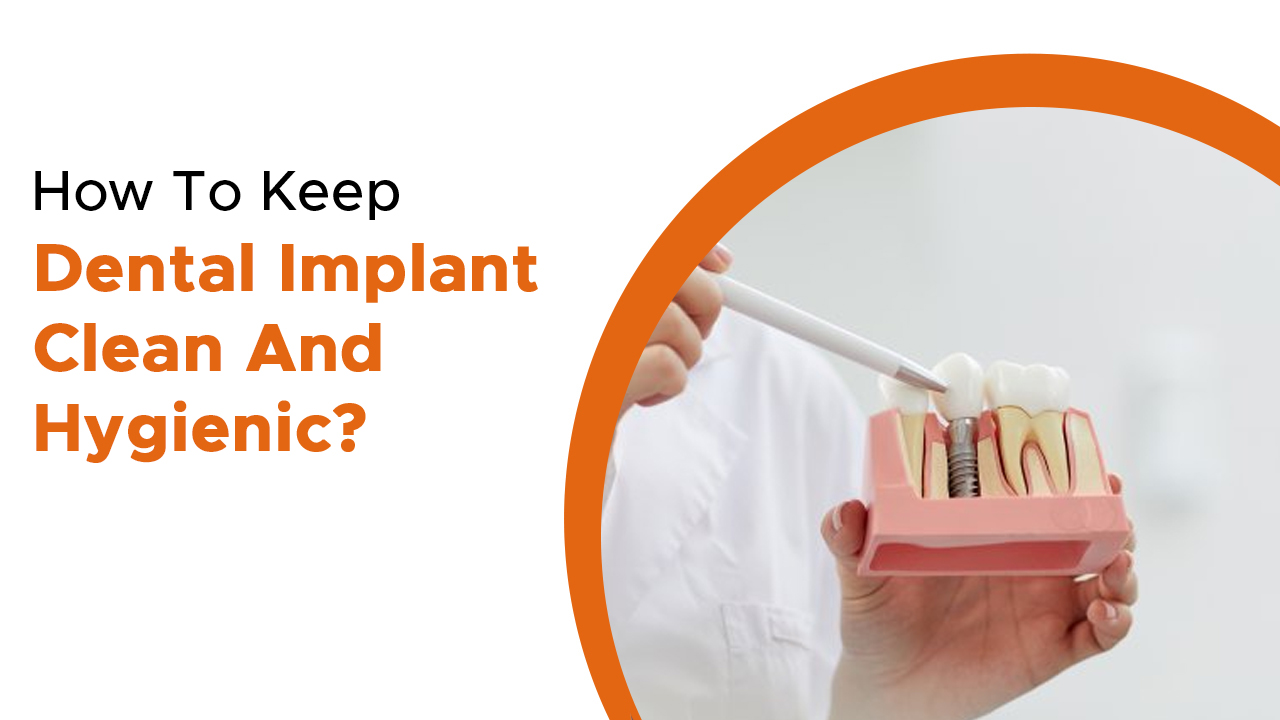
The direct answer is simple. Keep a dental implant clean and hygienic by brushing twice daily, cleaning between the teeth every day, keeping the gum line plaque-free, and going for regular professional check-ups. Good implant care protects the gums and bone around the implant, not just the visible crown.
Many people still worry even after getting an implant. Food may get stuck near the gum edge. The area may feel sore, smell bad, or never feel fully clean. Some patients think the implant cannot decay, so they assume basic brushing is enough. That is where problems start, because the implant crown may look clean while the tissue around it is getting inflamed.
To ensure your implants remain pristine, Eledent Dental Hospital pairs advanced and painless dental implants with a dedicated “diagnosis-first” method. Hence, our specialists provide comprehensive guidance on hygiene while ensuring long term success through consistent, expert follow-ups. With CEREC CAD-CAM technology and award-winning patient care, Eledent remains by your side at every step of your recovery and beyond.
This handy guide from one of our dental experts explains what to clean, how to clean it, what habits to avoid, and when to get the implant checked professionally.
What Does It Really Mean To Keep A Dental Implant Clean And Hygienic?
Keeping a dental implant clean means protecting the gum and bone around it from plaque and inflammation.
A dental implant does not get cavities like a natural tooth. The real risk sits around it. If plaque and biofilm stay near the gum line, the gums can get inflamed first. If that continues, the bone support around the implant can also get affected. That is why a complete guide to caring for your dental implants should never stop at basic brushing advice.
What matters most is this:
- Clean the gum edge, not just the chewing surface.
- Remove plaque every day before it hardens.
- Keep food debris from staying trapped around the implant.
- Watch for bleeding, swelling, or bad smell early.
Patients comparing dental implants in Hyderabad often focus on the procedure first. Long-term success depends just as much on what happens after the implant is placed.
What Daily Routine Keeps A Dental Implant Clean Every Day?
A proper daily routine keeps plaque from sitting around the implant for too long.
You do not need hard scrubbing. You need the right order, the right tools, and regular cleaning. The aim is to keep the implant crown clean and the gum line stable.
Morning cleaning
Start the day with gentle brushing around the implant and nearby teeth.
- Use a soft-bristled toothbrush.
- Angle the brush toward the gum line.
- Clean the front, back, and sides of the implant crown.
- Use light pressure so the gums do not get irritated.
Night cleaning
Night cleaning matters more because plaque and trapped food stay in the mouth longer while you sleep.
- Brush slowly before bed.
- Spend extra time where the crown meets the gum.
- Clean between the implant and nearby teeth.
- Rinse after the routine if your dentist has advised it.
During the day
Meals can leave small particles around the implant.
- Rinse with plain water after meals when brushing is not possible.
- Do not let sticky food sit around the implant for hours.
- Check the area if food gets trapped often.
Patients searching dental implant near me are often not just looking for treatment. They also want a routine that helps the implant stay clean, comfortable, and problem-free.
Which Cleaning Tools Work Best For Dental Implants?
The right cleaning tools make implant care easier and more effective.
You do not need every tool at once. You need the tools that match your implant design, spacing, gum health, and hand control.
| Tool | How it helps |
|---|---|
| Soft toothbrush | Cleans the implant crown and gum line gently every day. |
| Electric toothbrush | Helps if brushing is rushed or hand control is uneven. |
| Non-abrasive toothpaste | Cleans without being too harsh on the crown surface. |
| Implant floss or super floss | Helps clean around tight areas where a brush cannot reach. |
| Interdental brush | Works well for wider spaces beside the implant. |
| Water flosser | Flushes out food debris and supports deeper cleaning in hard-to-reach areas. |
| Alcohol-free mouthwash | Supports freshness and bacteria control when advised by a dentist. |
A water flosser is useful, but it is not a replacement for brushing or flossing. It works best as a support tool.
For many people with dental implants in Kondapur, the problem is not lack of effort. It is using the wrong tool for the space they are trying to clean.
How Do You Clean Different Types Of Dental Implant Restorations?
Different implant restorations need different cleaning methods.
This is one of the most missed parts of implant care. A single implant crown does not collect plaque in the same way as an implant bridge or removable overdenture.
| Implant Type | Best Cleaning Approach |
|---|---|
| Single implant crown | Brush around the crown edge, clean both side contacts, and focus on the gum line daily. |
| Implant-supported bridge | Use a water flosser, floss threader, or interdental brush to clean under the bridge where plaque collects. |
| Implant overdenture | Remove the denture as advised, clean the denture itself, then clean the gums and implant attachments separately. |
Single implant crown
This feels closest to a natural tooth, but the gum edge still needs special attention.
- Brush around the full crown.
- Clean where the implant meets the gum.
- Do not ignore the side contacts.
Implant-supported bridge
This needs extra care under the prosthesis.
- Clean under the bridge every day.
- Use a threader or water flosser if access is difficult.
- Check for trapped food after meals.
Implant overdenture
This needs two-part cleaning.
- Clean the denture outside the mouth.
- Clean the implant attachments and gums inside the mouth.
- Follow the soaking and storage advice given by your dentist.
Many people asking about dental implants in Manikonda do not realise this difference until they start cleaning the restoration at home.
What Daily Habits Quietly Damage Implant Hygiene?
Some implant problems build slowly because of daily habits, not because of one major mistake.
The implant may feel fine for weeks. Then one day the gums start swelling, food starts trapping, or the area develops a bad smell. In many cases, the problem is not the implant itself. It is the daily routine around it.
Habits that raise the risk of implant trouble:
- Skipping night cleaning.
- Brushing only the visible crown.
- Smoking regularly.
- Biting ice, nutshells, or very hard foods.
- Leaving food trapped around the implant.
- Ignoring grinding or clenching.
- Missing review appointments.
Smoking deserves special attention because it affects gum healing and blood flow. Teeth grinding matters too because too much pressure can overload the implant and surrounding structures.
For some patients with dental implants in Kukatpally, the implant feels dirty even after brushing. That usually means the gum edge and contact points are not being cleaned well enough.
What Warning Signs Mean Your Implant Needs A Dentist Visit?
Bleeding, swelling, smell, or repeated food lodgement around an implant should not be ignored.
Early treatment can stop a small gum issue from turning into a bigger implant problem. Many people delay the visit because the crown still feels fixed. That delay can make treatment more difficult later.
Warning signs to watch for:
- Bleeding while brushing near the implant.
- Swelling at the gum line.
- Bad taste or repeated bad smell.
- Food getting stuck more than before.
- Tenderness while chewing.
- Gum recession around the implant.
- A loose or shifting feeling.
One mild episode of irritation may not mean failure. Repeated symptoms mean the area needs a proper check. The same applies whether someone got dental implants in Banjara Hills or any other branch area.
How Often Do Dental Implants Need Professional Cleaning And Check-Ups?
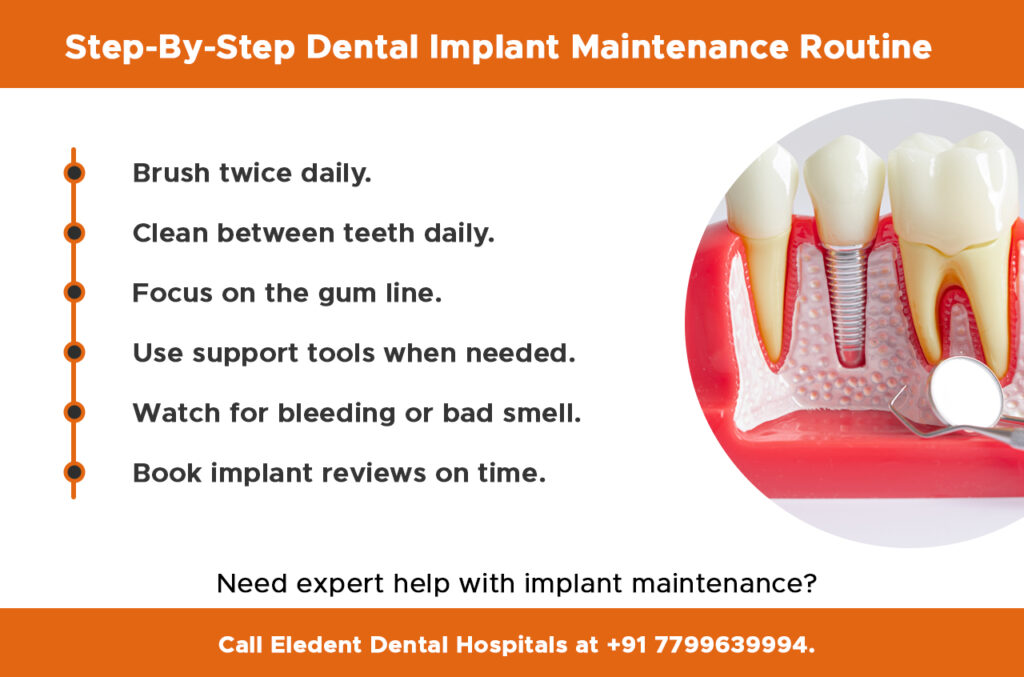
Most implants need professional review and cleaning every 3 to 6 months, depending on risk.
Home care controls day-to-day plaque. Professional care checks the deeper picture. During these visits, the dentist reviews the gums, checks implant stability, assesses bone support, and safely removes deposits around the implant. Regular maintenance visits are already part of the current implant-care guidance connected with this topic.
Professional visits may include:
- Gum health review.
- Implant cleaning with safe instruments.
- Bite check if pressure feels uneven.
- X-rays when bone support needs review.
- Home-care corrections if plaque is still being missed.
Patients comparing best dental implants in Kompally should not only compare price or treatment speed. Long-term maintenance support matters just as much.
Get Long-Term Implant Care Support At Eledent Dental Hospitals
Good implant treatment does not end after the crown is fixed. It continues with follow-up care, maintenance visits, hygiene correction, and early problem detection. Eledent Dental Hospitals supports that journey with advanced technology such as integrated implantology, intra oral scanners, CEREC chairside CAD-CAM, Zoom teeth whitening, and digital 3D X-rays.
If food keeps getting stuck, the gums feel sore, or the implant area never feels fully clean, get the right solution before the problem grows. For cleaner implants, healthier gums, and expert aftercare around dental implants in Hyderabad, contact Eledent Dental Hospitals at +91 7799639994.
FAQs
Can I use baking soda to clean a dental implant?
It is better not to. Baking soda can feel like a quick fix, but repeated use may be too harsh for regular implant care.
Is slight sensitivity normal around a dental implant after professional cleaning?
Mild sensitivity can happen for a short time, especially if the gums were a little inflamed before the cleaning. It should settle soon, not keep getting worse.
Do I need to replace my toothbrush more often if I have a dental implant?
Yes, keeping the brush fresh matters. A worn toothbrush does not clean well around the gum line, so change it every 3 months or sooner if the bristles spread out.
Can stress affect the health of my dental implant?
Yes, it can. Stress can lead to clenching or grinding, and that extra pressure may affect the implant and the surrounding gums over time.
Should I clean my implant differently when travelling?
Keep the routine simple and consistent. Carry your brush, floss or interdental cleaner, and do not skip night cleaning just because your schedule changes.
Leave a Reply