Author: eledenthospitals

  • Swollen Gums: The Silent Indicator of Serious Dental Problems

    Swollen Gums: The Silent Indicator of Serious Dental Problems

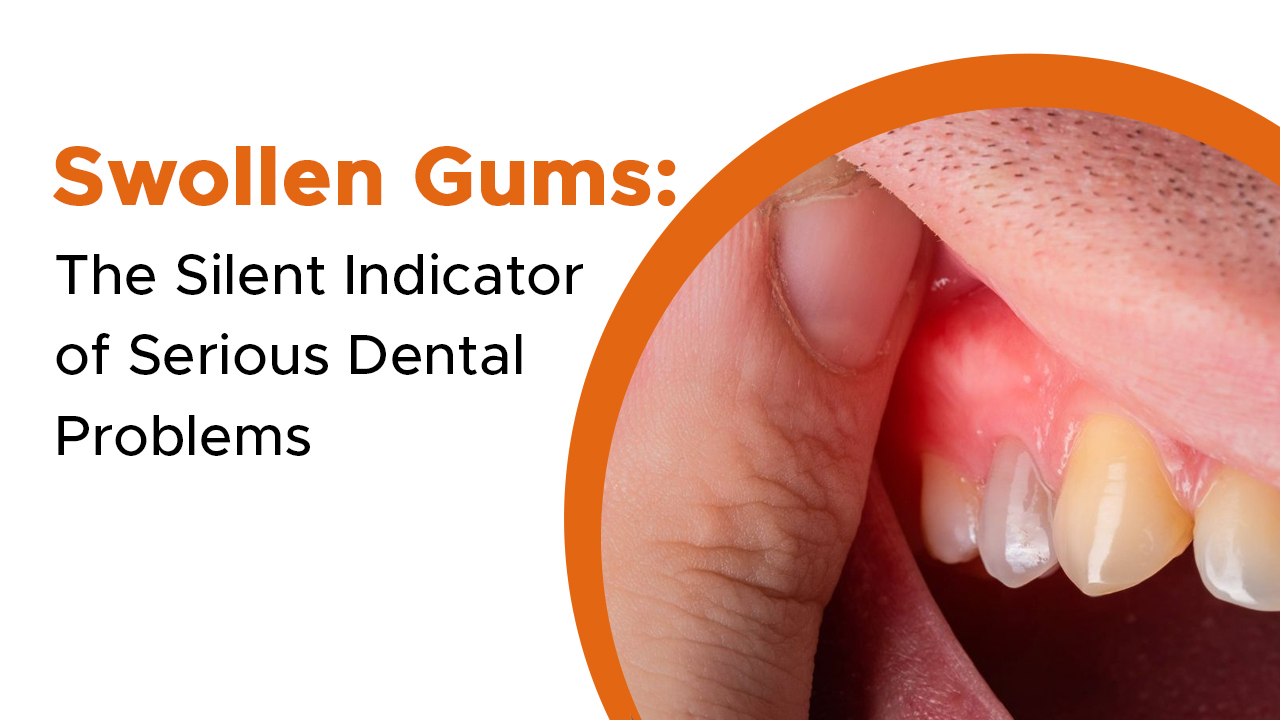
    Your swollen gums may look like a small issue, but they point to a deeper dental problem. You may notice bleeding while brushing, bad breath, gum pain or puffiness around one tooth. Many people ignore these signs until pain or loose teeth begin. Swollen gums: causes, symptoms and treatment must start with one clear truth. Gum swelling means bacteria has irritated or infected your gums.

    At Eledent Dental Hospital, gum care is planned by experienced dental specialists using digital diagnosis, advanced laser dentistry, strict sterilisation protocols, and comfort-focused treatment methods. With 19+ years of expertise, 30,000+ smiles treated and multiple Hyderabad branches, Eledent Dental Hospital helps patients get timely care for swollen gums before the problem turns into bone loss, loose teeth or complex gum surgery.

    This guide explains why swollen gums happen, when you should worry and how timely care can protect your teeth.

    Why Swollen Gums Demand Your Immediate Attention?

    Swollen gums need quick attention because they can signal gum inflammation, gingivitis or advanced periodontal disease. If you ignore them, the infection can damage gums, bone and tooth support.

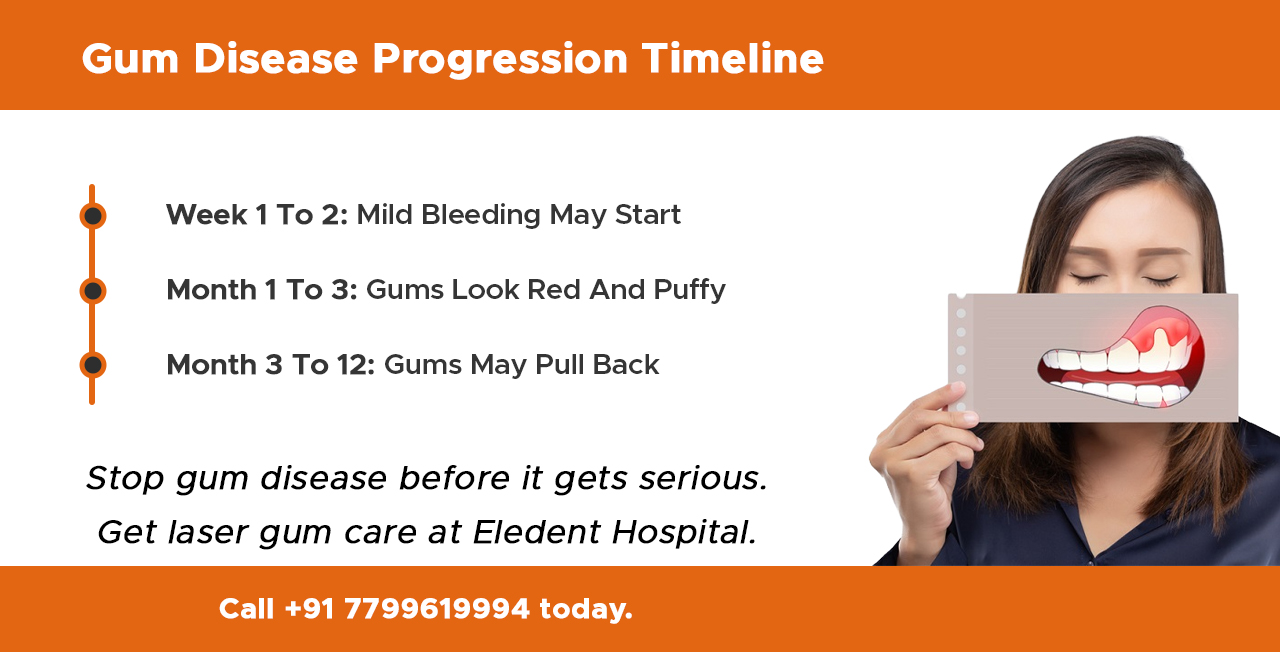
    Healthy gums look pink and firm. Infected gums may look red, puffy, shiny or purple. They may bleed during brushing or flossing.

    Swelling starts when plaque collects near the gumline. Plaque holds bacteria. These bacteria release toxins and trigger inflammation. Early gum disease can improve with timely care. Advanced gum disease can cause bone loss and loose teeth.

    4 Root Causes Behind Gum Swelling

    Swollen gums can happen due to several reasons. These can include plaque, infection, poor cleaning, your habits, medicines and even some health conditions. The exact cause matters because treatment changes with the problem.

    1 – Periodontal disease is the main cause

    Gingivitis is the early stage of gum disease. It causes redness, swelling and bleeding. If you do not treat it, it can move deeper and become periodontitis.

    Periodontitis damages the bone and tissues that hold your teeth. Deep gum pockets can form around teeth. These pockets trap more bacteria and make cleaning harder.

    2 – Poor oral hygiene feeds bacteria

    If you brush for less than 2 minutes or skip flossing, plaque can build up fast. Bacteria multiply around the gumline and trigger swelling.

    Clean your gumline daily. This area collects food, plaque and germs more easily than flat tooth surfaces.

    3 – Infections and health issues can worsen swelling

    Gum swelling can also come from mouth infections, dental abscess, wisdom tooth infection, vitamin deficiency or fungal infection.

    A painful gum boil, pus or swelling around one tooth may mean infection. You should not wait in these cases.

    4 – Lifestyle and medicines can affect gums

    Smoking and tobacco harm gum blood flow. They also reduce healing. Hormonal changes during pregnancy can make gums sensitive and swollen.

    Some medicines can make gum tissue grow or look puffy. Loose dentures or sharp dental edges can also irritate gums.

    Do Swollen Gums Have Connection with Your Overall Health?

    Chronic gum inflammation can affect more than your mouth. Gum infection can add to body wide inflammation and may worsen diabetes control, heart health risks and pregnancy concerns.

    Gums have many tiny blood vessels. When bacteria and inflammation stay active, your body keeps fighting infection. This long term stress can affect people who already have diabetes, heart issues or low immunity.

    You should treat gum swelling early, especially if you have diabetes, heart disease or pregnancy related gum changes.
    swollen gums: causes, symptoms

    Professional Treatment Options To Restore Gum Health

    A dentist treats swollen gums based on infection depth, gum pocket size, bone support and your symptoms. Treatment can range from deep cleaning to advanced laser gum care.

    Non Surgical Periodontal Therapy

    Deep cleaning removes plaque and tartar from below the gumline. Dentists call this scaling and root cleaning. It helps clean pockets that brushing cannot reach.

    Your dentist may use ultrasonic tools, hand instruments and local medicine in infected pockets. Some patients need 2 to 4 visits, depending on swelling and gum pocket depth.

    Advanced Laser Gum Treatment

    Laser gum treatment targets infected gum tissue with less cutting and less discomfort. It helps remove bacteria while protecting healthy tissue.

    Patients looking for laser gum treatment in Manikonda may benefit from this option when gums bleed, swell or form deep pockets. Eledent Dental Hospital also supports patients who need laser gum treatment in Kondapur with planned diagnosis and follow up.

    Laser care can help healing feel easier than traditional gum surgery in many cases. If you need laser gum treatment in Kukatpally, your dentist will first check if laser therapy suits your gum condition.

    Surgical Solutions for Serious Swelling in Gums

    Severe gum disease may need surgery when pockets become very deep or bone support reduces. Treatment may include gum flap surgery, gum grafting, bone grafting or tissue repair.

    Patients searching for laser gum treatment in Banjara Hills should get a full gum evaluation before deciding treatment. For advanced cases, laser gum treatment in Kompally may form one part of a larger gum care plan.

    How To Prevent and Treat Swelling in Gums At Home?

    You can reduce gum swelling risk with daily care, but home care cannot replace a dentist when infection has already started.

    Follow these steps:

    • Brush for 2 minutes twice daily
    • Hold the brush near the gumline
    • Floss or use interdental brushes daily
    • Use mouthwash if your dentist suggests it
    • Rinse with warm salt water for soreness
    • Stop tobacco completely
    • Eat foods rich in vitamin C, vitamin D and calcium

    For salt water rinse, mix 1 teaspoon salt in one glass of warm water. Rinse gently. Do not swallow it.

    When To Seek Immediate Professional Help?

    You should seek urgent dental care if swelling lasts more than 2 weeks, pain disturbs eating or sleep or pus appears near the gumline. These signs can point to active infection.

    Call a dentist quickly if you notice:

    • Fever with gum swelling
    • Fast growing swelling
    • Difficulty swallowing
    • Difficulty breathing
    • Pus discharge
    • Sudden tooth looseness
    • Severe chewing pain

    Do not wait for a routine visit if swelling spreads to the face or jaw.

    Trust Eledent Dental Hospital For Advanced Laser Gum Care

    Eledent Dental Hospital offers great and advanced gum care with specialist led diagnosis, laser technology, digital evaluation, painless protocols and convenient access across Manikonda, Kondapur, Kukatpally, Banjara Hills and Kompally. The team treats swollen gums, bleeding gums, gum infection, periodontal pockets and smile related gum concerns with careful planning.
    If your swollen, bleeding or painful gums trouble you.

    Get advanced gum treatment at Eledent Dental Hospital. Call +91 7799619994 today.

    FAQs

    1. Can swollen gums heal on their own?

    Mild swollen gums may improve with better brushing, flossing and rinsing.
    If swelling stays, bleeds or returns often, visit Eledent Dental Hospitals in Hyderabad.

    2. Are swollen gums always a sign of gum disease?

    No. Swollen gums can also happen due to injury, infection, pregnancy, medicines or dentures.
    A dentist in Hyderabad can find the exact cause.

    3. Is laser gum treatment painful?

    Laser gum treatment is usually comfortable because dentists use numbing when needed.
    Eledent Dental Hospitals offers laser gum care across Hyderabad locations.

    4. Can swollen gums cause tooth loss?

    Yes. Untreated swollen gums can turn into gum disease and damage bone support.
    Early treatment in Hyderabad can help protect your natural teeth.

    5. How soon should I visit a dentist for swollen gums?

    Visit a dentist if swollen gums last more than a few days.
    Go sooner if you notice pus, fever, severe pain or loose teeth.
  • How to Take Care of Braces: Essential Tips!

    How to Take Care of Braces: Essential Tips!

    Braces do not just straighten teeth. They also change how you eat, brush and clean your mouth every day. Food can get stuck around brackets and wires after almost every meal, and missed care can lead to cavities, gum swelling, white spots or broken brackets.

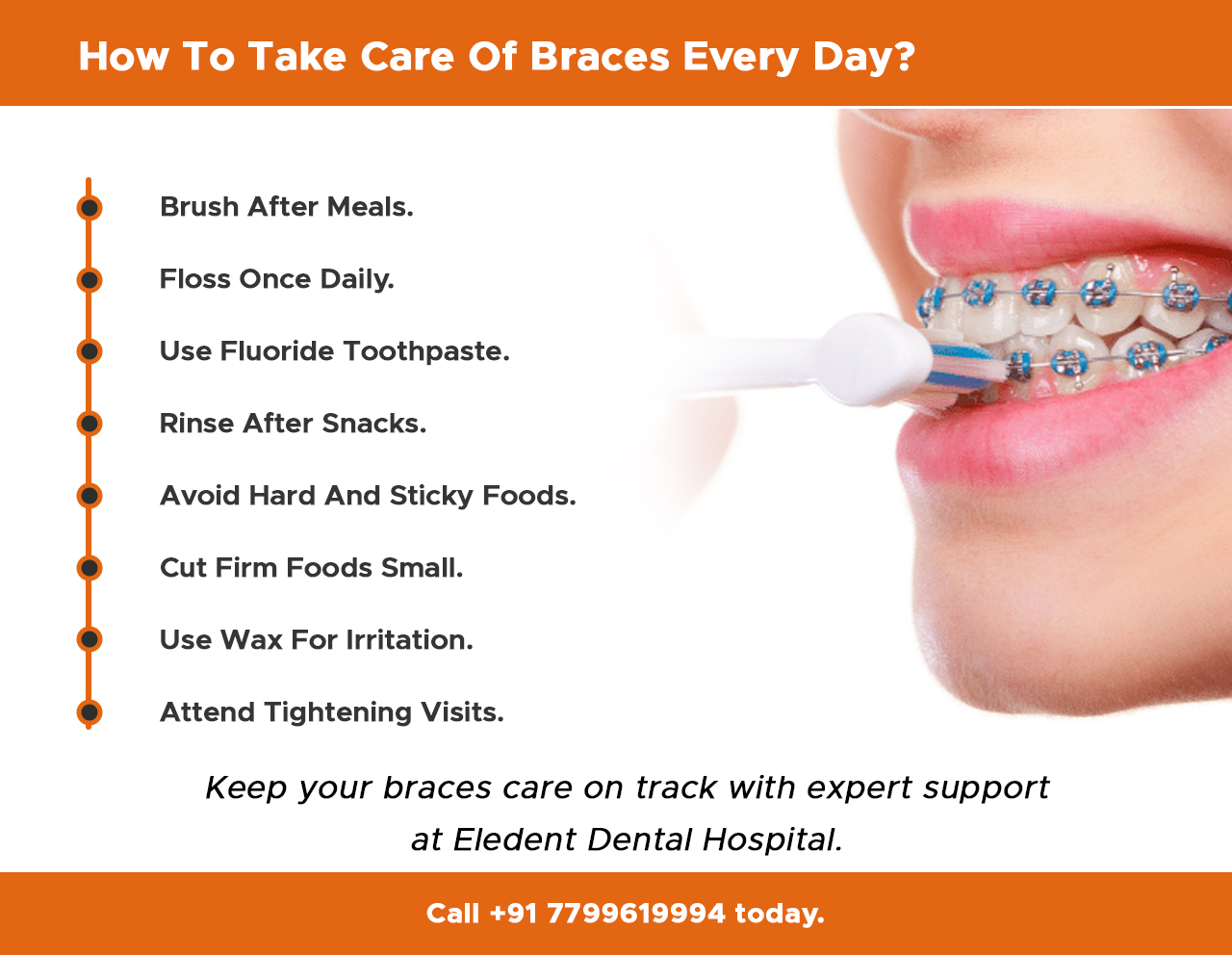
    The best way to take care of braces is to brush after meals, floss once daily with braces-friendly tools, avoid hard or sticky foods, manage soreness safely and attend tightening visits on time. These habits keep treatment cleaner, smoother and less likely to face delays.

    At Eledent Dental Hospital, braces treatment starts with a proper orthodontic assessment, digital diagnostics and a personalised plan for tooth movement. Our specialist orthodontists guide patients through tightening visits, hygiene checks, soreness management and bracket care, so treatment does not stop at placing braces.

    If you are considering dental braces treatment in Hyderabad or searching for teeth braces near me for an aftercare guide, this blog explains how to care for braces the right way.

    What Is The Best Daily Routine To Take Care Of Braces?

    The best daily braces care routine includes brushing in the morning, rinsing after meals and deep cleaning before bed. A fixed routine keeps plaque, food particles and stains away from brackets.

    Morning Braces Care

    Start with gentle brushing around every bracket. Clean:

    • Above the bracket
    • Below the bracket
    • Along the gumline
    • Back teeth
    • Chewing surfaces

    Use a soft toothbrush and fluoride toothpaste. You can use an electric brush if your orthodontist recommends it.

    Daytime Braces Care After Meals

    After meals or snacks, rinse your mouth well. Brush if you can. If not, rinse with water and check your braces in a mirror.

    Patients undergoing dental braces treatment in Kondapur ask how to manage braces outside home. A small braces kit solves this problem.

    Night Time Deep Cleaning

    Night cleaning should take the most time. Brush slowly, floss and check food stuck under wires. Plaque that stays overnight can cause white spots or cavities around brackets.

    dental braces treatment in hyderabad

    How Should You Clean Your Teeth And Braces Every Day?

    You should clean braces by brushing around brackets, flossing under wires and checking for trapped food every day. Braces need more careful cleaning than normal teeth.

    Brush for 2–3 Minutes After Meals

    Brush slowly from tooth to tooth. Do not rush around brackets.

    Area To Clean Why It Matters
    Top of brackets Food collects here
    Bottom of brackets Plaque can settle here
    Gumline Prevents swelling
    Under the wire Trapped food hides here
    Back teeth Chewing food collects here

    Use Braces Friendly Tools

    Helpful tools include:

    • Soft toothbrush
    • Fluoride toothpaste
    • Interdental brush
    • Floss threader
    • Orthodontic flosser
    • Water flosser

    A water flosser can loosen food, but brushing and flossing still matter.

    What Foods Should You Avoid And Eat With Braces?

    With braces, avoid hard, sticky and crunchy foods. Choose softer foods that do not damage brackets or wires.

    Avoid With Braces Better Option
    Hard nuts Soft fruits
    Chewing gum Soft snacks
    Popcorn Soft roasted snacks
    Sticky sweets Yogurt or smoothies
    Hard candy Soft desserts
    Whole apples Sliced apples
    • Avoid nuts, popcorn, ice, hard candy, chewing gum, caramel and gummy sweets. These foods can break brackets or bend wires.
    • Patients choosing dental braces treatment in Kukatpally should stay extra careful with sticky snacks during the first few weeks.
    • You can still eat firm foods if you cut them into small pieces. Slice apples, carrots, corn, toast and firm fruits. Avoid biting directly with your front teeth.
    • After tightening, choose soft foods like curd rice, pasta, eggs, soup, yogurt, smoothies, soft rice and cooked vegetables.

    How Should You Care For Braces Before And After Meals?

    Before meals, choose safe foods and chew carefully. After meals, rinse, brush if possible and remove food stuck around brackets.

    Before Eating

    Check if the food feels hard, sticky or difficult to clean. Cut firm foods into bite sized pieces. Avoid foods that can break brackets when you eat outside.

    While Eating

    Chew slowly and use your back teeth. Do not chew ice, pen caps or fingernails. These habits can damage braces.

    After Eating

    Follow this simple order:

    • Rinse your mouth.
    • Check your braces.
    • Brush if possible.
    • Use an interdental brush for visible food.
    • Keep your braces kit with you.

    People searching for dental braces treatment in Manikonda should also consider follow up access. Braces care becomes easier when your orthodontist can help with small issues quickly.

    What Should You Do For Braces Pain, Soreness Or Emergencies?

    Mild soreness can happen with braces, especially after tightening. Broken brackets, loose wires or severe pain need orthodontic attention.

    For Soreness After Tightening

    You can try:

    • Soft foods
    • Cold smoothies
    • Warm saltwater rinses
    • Gentle brushing
    • Avoiding hard chewing

    Soreness settles in a few days. Call your orthodontist if pain feels sharp or keeps increasing.

    For Bracket Or Wire Irritation

    Use orthodontic wax if a bracket or wire rubs your cheek. Dry the area gently and place a small amount of wax over the rough spot.

    Do not pull or cut a poking wire yourself. Use wax and contact your orthodontist.

    When To Call Your Orthodontist

    Call your orthodontist if you notice:

    • Severe pain
    • Bleeding gums
    • Broken bracket
    • Loose wire
    • Swelling
    • Wire cutting the cheek
    • Difficulty eating

    Patients undergoing dental braces treatment in Banjara Hills should not wait if something feels sharp, loose or broken.

    How Do Regular Orthodontic Visits Help Maintain Braces?

    Regular orthodontic visits help adjust braces, monitor tooth movement and prevent small issues from slowing treatment. Most patients need visits every 6–10 weeks.

    During follow ups, your orthodontist may:

    • Tighten wires
    • Replace elastics
    • Check brackets
    • Review tooth movement
    • Check hygiene
    • Spot early problems

    Braces work through controlled pressure. Missed visits can slow progress because teeth may not move as planned.

    Regular monitoring keeps treatment cleaner, safer and more predictable during dental braces treatment in Hyderabad.

    Get Expert Dental Braces Treatment At Eledent Dental Hospital

    Eledent Dental Hospital offers braces care with specialist orthodontists, digital diagnostics, regular monitoring, hygiene guidance and comfort focused support. With 19+ years of experience, Eledent Dental Hospital supports patients across Kondapur, KPHB/Kukatpally, Manikonda, Banjara Hills and Kompally. Whether you need dental braces treatment in Kompally or follow up braces care near you, Eledent Dental Hospital helps you stay on track.

    Struggling to manage braces care? Book expert braces treatment at Eledent Dental Hospital. Call +91 7799619994 today.

    FAQs

    Should I use mouthwash with braces?

    Yes, using a fluoride or alcohol-free mouthwash helps protect your teeth and gums.

    Can I play sports with braces?

    Yes, but wearing a mouthguard is important to protect your braces and teeth.

    What should I do if a bracket becomes loose?

    Use orthodontic wax to reduce irritation and contact your orthodontist immediately.

    Do I still need regular dental cleanings with braces?

    Yes, regular cleanings help remove plaque and prevent cavities.

    Will I need retainers after braces?

    Yes, retainers help keep your teeth in their new position after braces treatment.

  • What to Expect with Invisalign Treatment in the First 4 Weeks?

    What to Expect with Invisalign Treatment in the First 4 Weeks?

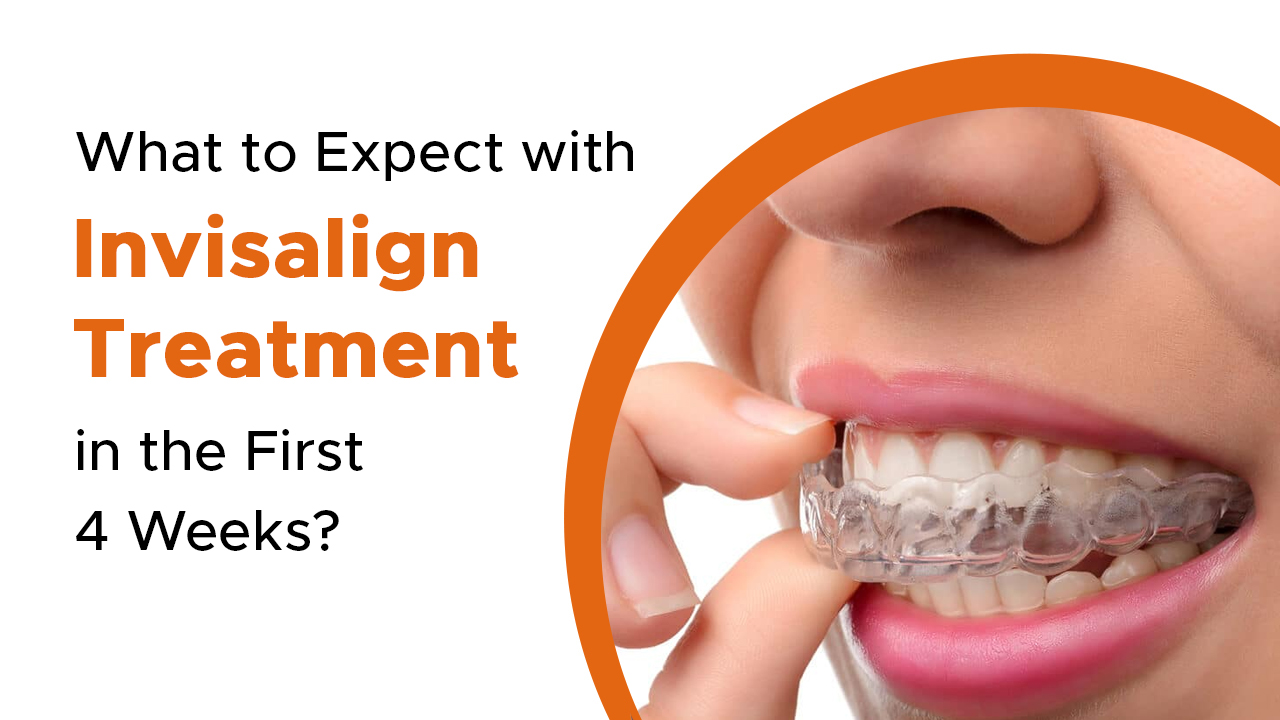
    The first 4 weeks of Invisalign treatment are mainly about getting used to aligners, managing mild pressure, building wear-time discipline and learning daily care habits. Do not expect major visible changes yet.

    Tightness means controlled tooth movement has started. The first month sets the tone for Invisalign treatment success. Many patients worry about discomfort, speech changes and daily routine adjustments during this period.

    At Eledent Dental Hospital, our orthodontic specialists have guided over 2,800 Invisalign cases across Hyderabad with personalised first-month support protocols that reduce adjustment anxiety by 60%. Our team understands that the first four weeks require clinical patience and daily reassurance, which is why every patient receives structured weekly check-ins and 24/7 query resolution during Month 1.

    This blog is written by one of our best consultant orthodontists at Eledent Dental Hospital, to help you go through your first month with confidence. Read on to understand what is normal, what needs attention and how to avoid mistakes that slow progress.

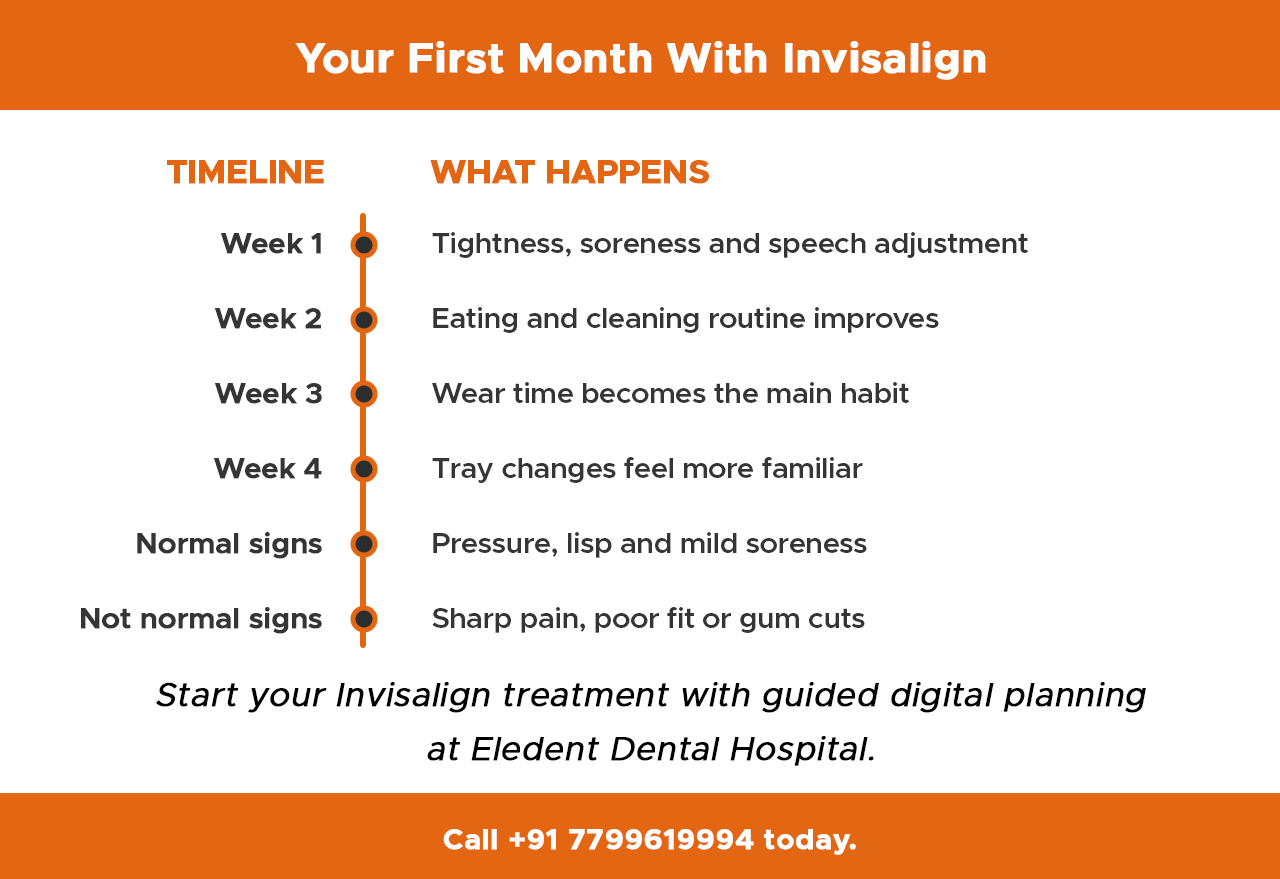
    Week 1: Your Mouth Is Learning Something New

    In Week 1, Invisalign can feel tight because your teeth, gums and tongue are adjusting to a new appliance in the mouth.

    What you may notice:

    • First 24 to 48 hours are crucial.
    • Mild soreness while biting or removing trays.
    • Slight lisp or extra saliva production.
    • Aligner edges may feel new against lips or tongue.
    • Tongue keeps touching the trays out of curiosity.
    • Difficulty removing aligners smoothly at first.

    Tightness when you first wear the tray is expected. Sharp cutting pain or ulcers are not. If aligner edges hurt your gums, contact your provider.

    For patients undergoing invisalign treatment in Kondapur, first-week follow-up at Eledent Dental Hospital helps identify fit issues early.

    Week 2: The Routine Starts Feeling Less Awkward

    By Week 2, most patients become more comfortable removing aligners, speaking clearly and managing meals around wear time.

    What improves by week 2:

    • Speaking becomes clearer as the tongue adjusts.
    • Removing trays becomes easier and faster.
    • Eating without aligners becomes automatic.
    • Brushing before reinserting trays turns into a habit.
    • Carrying an aligner case becomes second nature.

    Dentist tip: Avoid wrapping trays in tissue. Many patients accidentally throw them away. Always use a hard case.

    Patients receiving invisalign treatment in Manikonda report that Week 2 feels much lighter than Week 1.

    Week 3: Wear Time Becomes the Real Test

    By Week 3, Invisalign feels more manageable, but wearing aligners for 20–22 hours a day becomes the most important habit.

    Why consistency does matter:

    • Aligners work only when they are in your mouth.
    • Teeth can shift back if trays are removed too long.
    • Even 4 hours less wear per day can delay results.

    What happens if you wear aligners only for 14 to 16 hours:

    • Trays may not fit well at the next change.
    • Treatment timeline gets longer.
    • Teeth may not track properly with the plan.

    Managing wear time during daily life:

    • In office or college, keep trays in during meetings or classes.
    • Carry a pack case, toothbrush and floss in your bag.
    • Remove trays when drinking coffee or tea, drink quickly, rinse and reinsert.
    • Limit snacking to meal times.

    Reminder tips for daily wear:

    Set phone alarms after meals to remind you to reinsert trays. Many patients receiving invisalign treatment in Kukatpally find this simple habit highly effective.

    Week 4: You Start Understanding Your Aligner Pattern

    By Week 4, most patients understand how tray changes feel and can tell the difference between normal tightness and poor fit.

    What you learn by Week 4:

    • New trays may feel tight for 1–2 days, then loosen slightly
    • Early progress may be felt more than seen
    • Small gaps between tray and tooth need review
    • Attachments may feel smoother with time as you get used to them

    When to contact your dentist:

    If the tray does not seat fully even after using chewies, or if one section feels loose while the rest fits well, schedule a check-up.

    Invisalign treatment in Banjara Hills at Eledent Dental Hospital includes Week 4 progress tracking to confirm that teeth are moving as planned.

    your-first-month-with-invisalign

    What Is Normal During the First Month of Invisalign?

    Mild pressure, soreness, speech changes and extra saliva are normal during the first month of Invisalign treatment.

    Expected experiences in Month 1:

    • Tightness after wearing a new tray.
    • Mild soreness while chewing hard foods.
    • Slight lisp for 3 to 7 days after starting.
    • Extra saliva during the first week.
    • Minor discomfort when removing aligners initially.
    • Attachments feeling rough or bumpy at first.

    All of these settle down as your mouth adapts.

    What Is Not Normal During the First Month?

    Sharp pain, bleeding gums, cracked aligners, loose attachments or trays that do not fit properly should be checked by your dentist.

    Warning signs that need attention:

    Issue What it may mean
    Tray not seating fully Tracking problem or wrong tray
    Attachment falling off Needs rebonding by dentist
    Gum cuts or ulcers from sharp edges Aligner needs trimming
    Severe pain that does not settle Possible root pressure issue
    Bite feeling suddenly uncomfortable Tray may not be fitting correctly

    Do not force a badly fitting aligner. Contact your provider instead.

    Patients receiving Invisalign treatment in Kompally can reach support team at Eledent Dental Hospital for same day check up.

    First-Month Invisalign Mistakes That Can Slow Your Progress

    The first month mistakes that affect Invisalign progress are poor wear time, eating with aligners and not cleaning trays properly.

    Here’s how to avoid errors:

    • Do not remove aligners too often for snacks or drinks.
    • Don’t forget to wear them after meals or brushing.
    • Drink tea, coffee or coloured drinks with trays out.
    • Always brush teeth before reinserting aligners.
    • Change trays to the next set only with dentist advice.
    • Do not leave trays loose in bags, pockets or wrapped in tissue.

    Each of these mistakes can add weeks to your treatment or cause staining and damage.

    Will You See Any Change in the First 4 Weeks After Invisalign Treatment?

    Some patients notice small changes in the first 4 weeks, but visible Invisalign results take longer. What to expect visually:

    • Do not judge treatment only by mirror changes.
    • Better tray fit over time is an early progress sign.
    • Teeth movement starts gradually and builds momentum.
    • Case complexity changes the timeline significantly.

    Invisalign works by applying gentle, controlled force. Teeth do not shift overnight. Trust the process and focus on compliance.

    A Dentist’s First-Month Tips for Invisalign Patients

    The first month of Invisalign becomes easier when you follow wear time, clean trays daily and contact your dentist early if something feels wrong.

    Practical tips from our orthodontic team at Eledent Dental Hospital:

    • Switch trays at night if advised, so tightness happens while you sleep.
    • Keep a case with you everywhere, even for short trips.
    • Use phone reminders to reinsert trays after eating.
    • Keep meals structured to avoid constant snacking.
    • Clean trays gently with a soft brush and mild soap.
    • Do not compare your progress with another patient’s timeline.

    Book Your Invisalign Treatment at Eledent Dental Hospital

    The first month of Invisalign is easier when your orthodontist understands adjustment challenges and offers proactive first-week guidance. At Eledent Dental Hospital, our certified Invisalign providers have successfully managed 2,800+ aligner cases with a 94% patient comfort satisfaction score in the first month. We use iTero intraoral scanners for precision digital planning, offer same-day aligner adjustments if fit issues arise and provide detailed post-care instructions tailored to your lifestyle and case complexity.

    Our dental experts make sure you never feel alone during the adjustment period. Call +91 7799619994 to book your Invisalign consultation at Eledent Dental Hospital today. Visit eledenthospitals.com.

    FAQs

    Is the first week of Invisalign the hardest?

    Yes, the first week is usually the hardest because your teeth and mouth are adjusting to the aligners. Mild pain, pressure, or speech changes are common but improve within a few days.

    Why do my aligners feel tight in the first month?

    Tight aligners mean they are working properly by applying gentle pressure to move your teeth. This feeling is strongest with new trays and usually eases after a few days.

    Can I remove Invisalign for a few extra hours in the first month?

    No, you should wear aligners 20 to 22 hours daily for best results. Extra removal time can delay progress and cause poor tray fit.

    Should I worry if I do not see results in 4 weeks?

    No, early Invisalign results are often not visible. The first month focuses on subtle tooth movement and getting your aligners to fit properly.

    When should I call my dentist during the first month?

    Contact your dentist if you have sharp pain, poor fit, or damaged aligners. Also call if you notice gum cuts, irritation, or loose attachments.

  • Do Dental Fillings Hurt: What to Expect When Getting a Cavity Filled?

    Do Dental Fillings Hurt: What to Expect When Getting a Cavity Filled?

    Tooth pain while chewing or sensitivity when you drink something cold can make even a small cavity feel stressful. What worries most people is not the cavity, but the question, “do dental fillings hurt?”

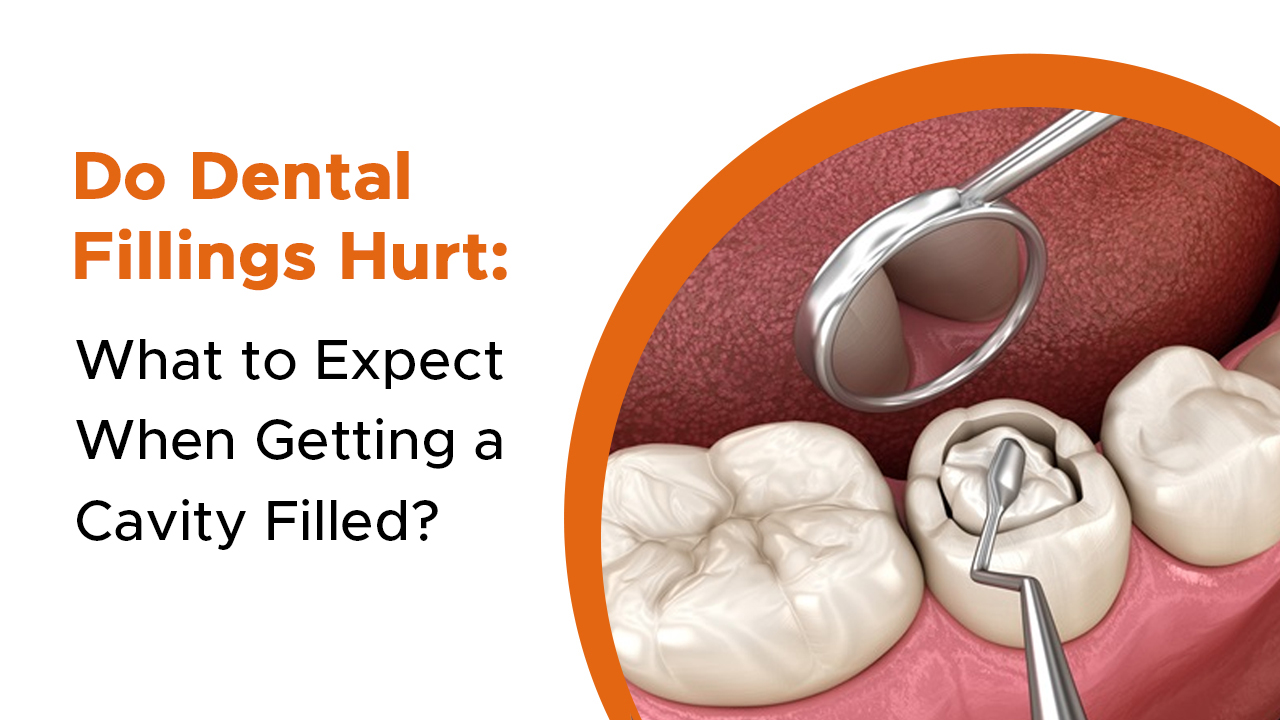
    Dental fillings usually do not hurt because the tooth is numbed before treatment. You may feel pressure or vibration, but sharp pain during the procedure is not expected.

    This guide explains Dental Fillings Hurt? What to Expect (Step by Step) so you know exactly what happens before, during, and after a filling. At Eledent Dental Hospital, the focus is on comfortable cavity treatment and early diagnosis, so small cavities are treated before they turn into painful root canal cases.

    If you are planning a dental filling in Hyderabad, this blog will help you feel clear and prepared before your visit.

    The Short Answer: Do Dental Fillings Actually Hurt?

    Dental fillings do not hurt because the dentist numbs the area before removing decay. You may feel pressure, vibration, or water spray during the procedure, but you should not feel sharp pain.

    Most people expect pain because they imagine old-style drilling. Modern dentistry, including local anaesthesia, better dental tools, and patient-friendly care make the process far more comfortable and painless.

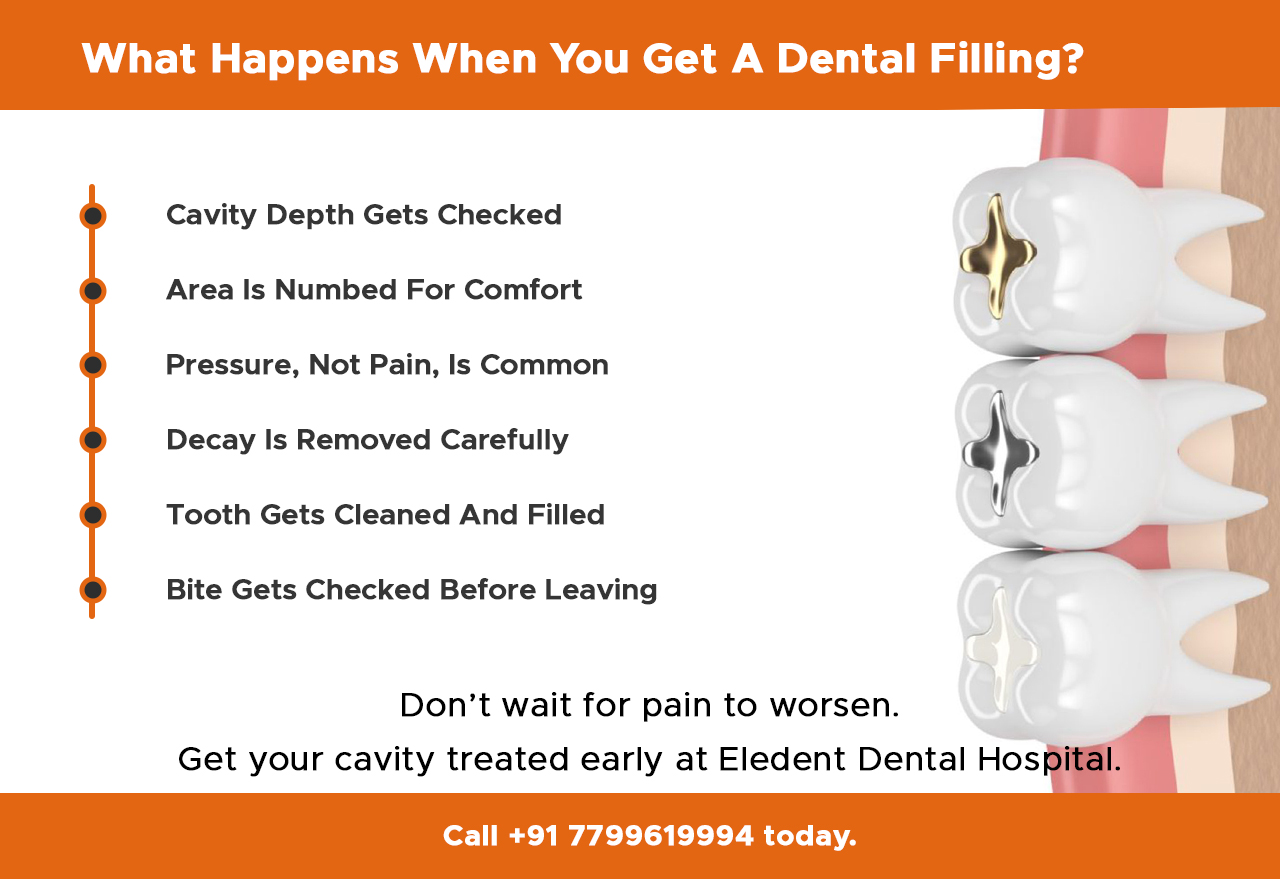
    What You Might Feel During the Dental Filling Procedure?

    Here is what happens:

    • Numbing: Quick pinch or slight sting sensation felt.
    • Numbness phase: Lips, cheek, or tooth feels heavy and numb.
    • Decay removal: Pressure, vibration, and drilling sounds may occur.
    • Cleaning: Water spray and suction keep area clear.
    • Filling placement: Mild pressure while material is shaped and placed.
    • Bite check: Dentist checks bite using marking paper gently.

    If you feel pain during any step, tell your dentist immediately.

    what-happens-when-you-get-a-dental-filling

    Do You Always Need an Injection for a Filling?

    Not all fillings require an injection. A small and shallow cavity may need little or no anaesthesia, while a deeper cavity needs numbing for comfort.

    Cavity Type Injection Need
    Very small surface cavity May not be needed
    Medium cavity Dentist may suggest numbing
    Deep cavity near nerve Usually needed
    Sensitive tooth Numbing helps comfort
    Anxious patient Numbing can reduce fear

    Skipping numbing in a deep cavity can make the procedure uncomfortable. Your dentist will check cavity depth before deciding whether you may need an injection during the dental filling procedure or not.

    Patients looking for dental filling in Kondapur should ask whether their cavity is shallow or deep during the first consultation.

    What Changes Right After the Filling?

    After a filling, numbness and mild sensitivity are common for a few hours. The numb feeling reduces as the anaesthesia wears off. You may notice:

    • Numb lips or cheek for 2 to 4 hours.
    • Mild soreness near the treated tooth.
    • Slight sensitivity to cold food or drinks.
    • A different bite feeling for some time.
    • Risk of biting your cheek while numb.

    Avoid chewing until normal feeling returns. Choose soft food if you feel tenderness after treatment.

    Is Sensitivity After a Filling Normal Or Something To Worry About?

    Mild sensitivity after a filling is normal and settles within a few days. Sensitivity can happen because the tooth adjusts after decay removal and filling placement.

    Symptom What It May Mean
    Cold sensitivity Common after filling
    Mild pressure while biting May settle in a few days
    Sensitivity in deep cavity Tooth may need more time
    Sharp pain while chewing Bite may need adjustment
    Pain lasting beyond 10 to 14 days Dentist review needed

    If sensitivity keeps increasing, do not ignore it. A quick check can prevent bigger problems.

    Why Your Tooth Might Feel “High” After a Filling?

    If your bite feels uneven after a filling, the filling may need a quick adjustment by your dentist. This is called a “high filling.” A high filling can feel like:

    • One tooth touches first while biting
    • Pain when chewing on that side
    • Pressure in the filled tooth
    • Jaw discomfort after meals

    This is easy to fix. Your dentist can polish or adjust the filling surface in a few minutes. Ignoring it can strain the tooth and cause lasting discomfort.

    When a Simple Filling Might Turn Into Something Bigger?

    If a cavity is too deep, a filling may not be enough and root canal treatment may be required. This happens when decay reaches the inner nerve area of the tooth.

    Early cavities stay in the outer tooth layers. Deep cavities move closer to the pulp. Once bacteria reach the pulp, you may feel severe pain, swelling, or lingering sensitivity.

    People searching for dental filling in Kukatpally should not wait until pain becomes constant. Early filling can save tooth structure and reduce treatment complexity.

    What You Should Know Before You Go For a Filling?

    Knowing a few key things before your appointment can help you feel more prepared and comfortable. Most dental filling appointments are simple and short. Before your visit:

    • Eat a normal meal unless your dentist says otherwise.
    • Tell your dentist about allergies or medicines.
    • Ask how deep the cavity is.
    • Ask what filling material will be used.
    • Tell your dentist if you feel anxious.
    • Plan soft food for the first meal after treatment.

    If you need a dental filling in Manikonda, use the consultation to understand the cavity depth and aftercare steps clearly. If you are considering dental fillings treatment in Kompally, choose a clinic that focuses on comfort, hygiene, and proper bite correction.

    You Don’t Have to Fear a Simple Dental Filling and Delay It!

    Delaying a dental filling can allow the cavity to deepen and may lead to more complex treatments like root canal. A small cavity today can become a painful problem later.

    Here is the simple risk:

    • Small cavity grows: More tooth structure gets damaged over time.
    • Decay reaches nerve: Root canal treatment may become necessary.
    • Tooth weakens: Risk of fracture increases significantly.
    • Food keeps getting stuck: Decay can spread more quickly.
    • Pain increases: Emergency dental care may be required.

    Early filling saves time, discomfort, and natural tooth strength.

    Get Comfortable Dental Filling Treatment at Eledent Dental Hospital

    At Eledent Dental Hospital, dental fillings are done with a focus on comfort, precision, and early diagnosis. Patients get 19+ years of experience, specialist-led care, digital diagnostics, CBCT support, intraoral scanners, and multiple Hyderabad locations. If you need dental filling in Hyderabad, Eledent Dental Hospital helps you treat cavities before they turn painful.

    Cavity pain or food getting stuck? Get comfortable dental filling treatment at Eledent Dental Hospital. Call +91 7799619994 today.

    FAQs

    Can I eat immediately after a filling?

    You should wait until the numbness wears off before eating. Avoid chewing on the treated side for a few hours to prevent discomfort or damage.

    How long does a dental filling last?

    Dental fillings can last several years with good oral hygiene. Their lifespan depends on the material used, cavity size, and maintenance.

    Why does my tooth hurt when I bite after a filling?

    This may be due to a high filling or temporary sensitivity after treatment. If pain persists, a simple dental adjustment usually resolves it.

    Are white fillings better than silver fillings?

    White fillings are more aesthetic and blend with natural teeth, especially in visible areas. Your dentist will recommend the best option based on your case.

    Can a cavity come back after filling?

    Yes, new decay can form around a filling if oral hygiene is poor. Regular brushing, flossing, and dental visits help prevent recurrence.

  • Things You Should Know Before Undergoing Root Canal Treatment

    Things You Should Know Before Undergoing Root Canal Treatment

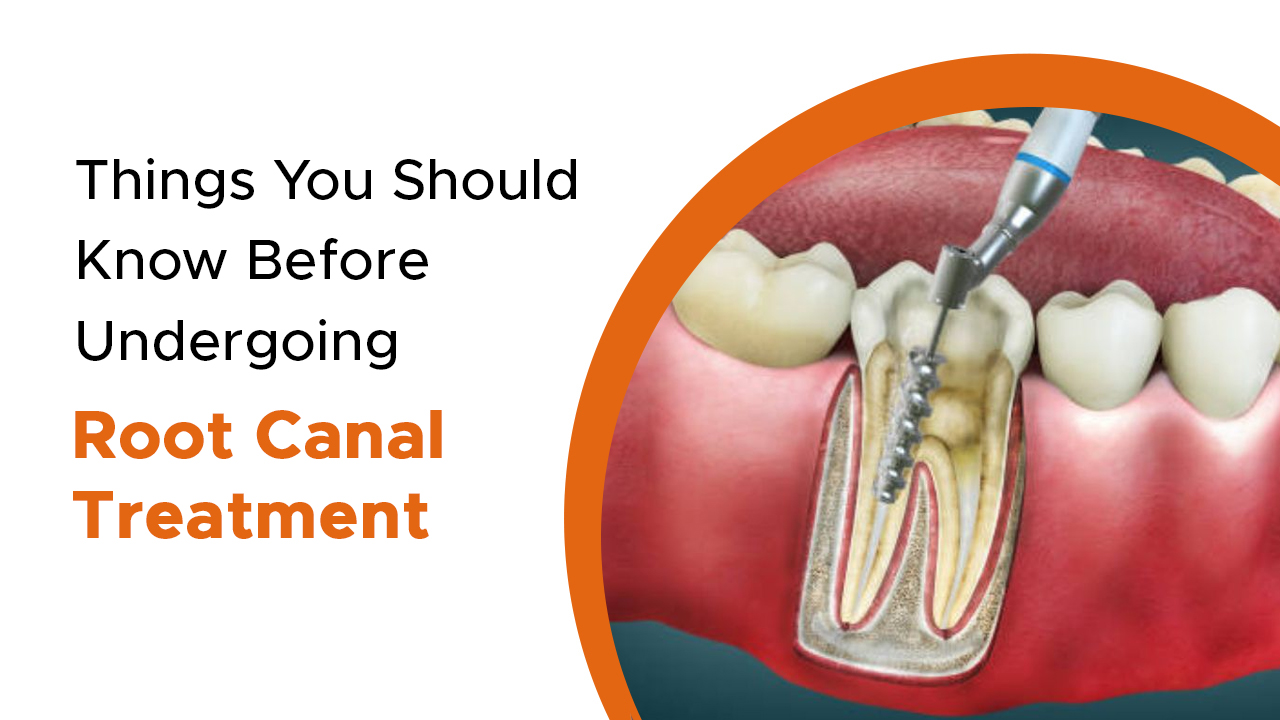
    Root canal treatment removes infection from inside the tooth and protects your natural tooth from extraction. Tooth pain can disturb eating, sleep, work and even daily conversations. If your dentist has advised a root canal, you may worry about pain, multiple visits, cost or whether the tooth can still be saved.

    At Eledent Dental Hospital, patients receive specialist-led care, digital 3D scans and 19+ years of dental expertise across Hyderabad. This guide is written by an expert dentist from Eledent Dental Hospital to help you prepare for your root canal treatment with clarity.

    If you are considering root canal treatment in Hyderabad, this blog explains what happens before, during and after the procedure.

    First, Do You Really Need a Root Canal Treatment?

    A root canal is needed when infection reaches the inner pulp of the tooth and cannot heal on its own. Your dentist may suggest it when a filling can no longer protect the tooth.

    Common signs you may need a root canal treatment include:

    Fear Reality
    “RCT will be painful” Anaesthesia keeps the area numb
    “Pain has stopped, so tooth healed” Infection may still remain
    “Extraction is easier” Replacing a tooth needs more treatment
    “I can wait for months” Infection can spread fast
    “Crown is optional for all teeth” Back teeth need protection

    A root canal saves the natural tooth. Extraction removes it completely. If your dentist says the tooth cannot heal with a filling, waiting can make the tooth weaker.

    What Happens If You Delay a Root Canal?

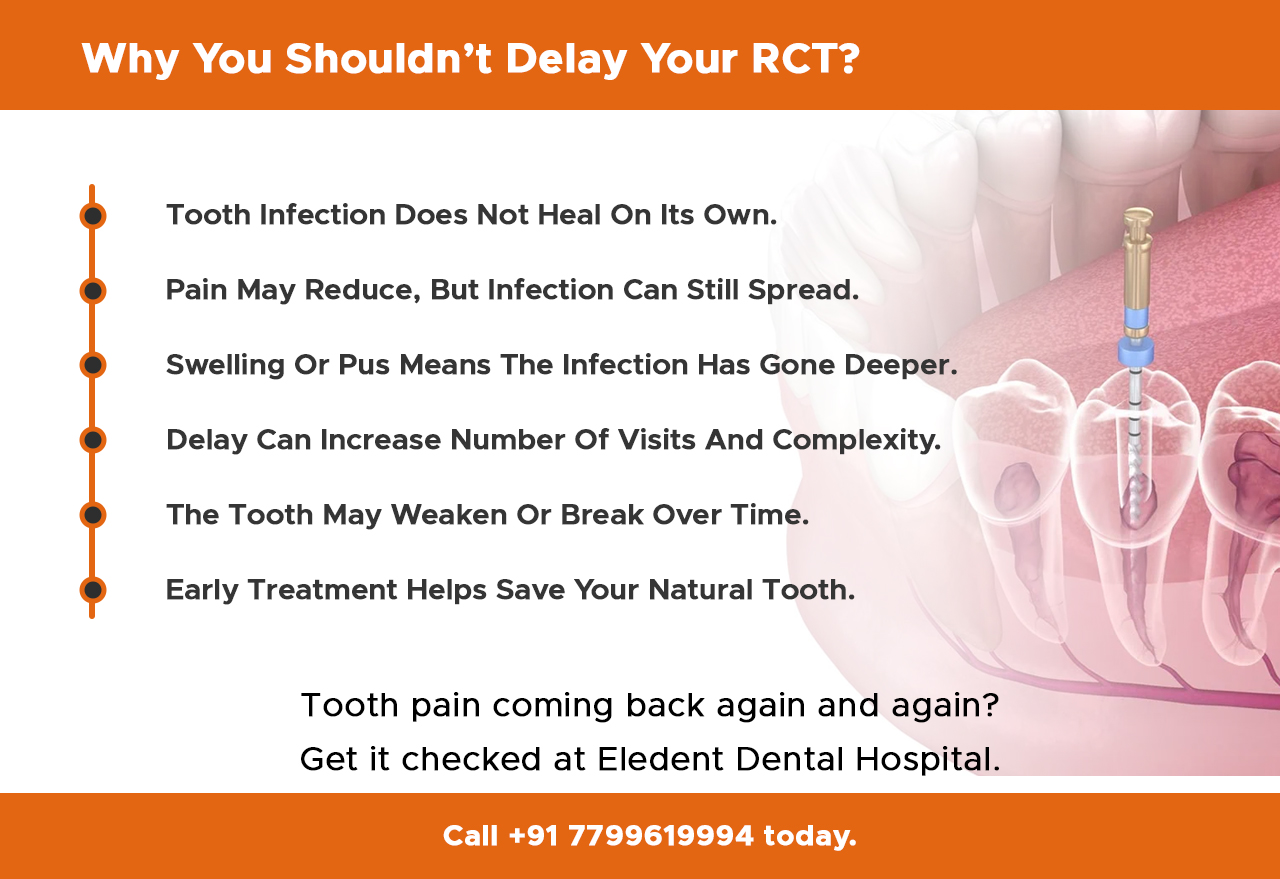
    Delaying a root canal can allow infection to spread from the tooth pulp to the root and surrounding bone. This can lead to severe pain, swelling, abscess or tooth loss.

    A small delay may feel harmless when pain reduces. The infection can still keep moving inside the tooth. A swollen tooth may need medication, drainage or extra cleaning before final sealing.

    Patients looking for root canal treatment in Manikonda should not wait until swelling starts. Early treatment can save time, cost and tooth structure.

    why-you-shouldn’t-delay-your-RCT

    What Actually Happens During a Root Canal?

    A root canal involves cleaning the infected pulp, disinfecting the root canals and sealing the tooth to prevent reinfection. The dentist keeps the process controlled with local anaesthesia.

    Steps in Root Canal Treatment

    • Diagnosis: Checks pain, X-rays, and infection depth.
    • Numbing: Uses local anaesthesia for comfort.
    • Access opening: Creates a small opening in the tooth.
    • Cleaning: Removes infected pulp from canals.
    • Disinfection: Cleans bacteria inside the root.
    • Filling: Seals canals with filling material.
    • Restoration: Places filling or advises crown support.

    Digital scans help the dentist understand root shape, infection level, and tooth condition before treatment.

    Pediatric Dentistry in Hyderabad focuses on preventive and specialized dental care for infants, children, and teenagers in a safe and child-friendly environment.

    Does a Root Canal Hurt? What You Will Really Feel

    Modern root canal treatment does not hurt because the dentist numbs the tooth before starting. Most patients feel pressure, vibration or mild pulling instead of pain. Here’s what you may feel:

    • Small pinch during anaesthesia
    • Numbness in lips or cheek
    • Pressure during cleaning
    • Mild soreness after treatment
    • Sharp pain during the procedure only if the tooth is not fully numb, which your dentist can correct

    The pain people remember comes from the infection before treatment. If you want painless root canal treatment in Hyderabad, choose a clinic that explains each step and checks your comfort before starting.

    How Many Visits Does a Root Canal Take?

    A root canal may take 1 to 3 visits depending on infection severity, tooth type, swelling and canal shape. Some simple cases finish in one sitting. Infected teeth may need more visits.

    1. Mild Infection: One visit usually sufficient.
    2. Deep Infection: Two visits often required.
    3. Swelling or Abscess: Two to three visits.
    4. Complex Molar Tooth: Extended chair time needed.
    5. Retreatment Case: Multiple visits may occur.

    A front tooth takes less time. A molar tooth may need more time because it has multiple canals.

    Do You Always Need a Crown After a Root Canal?

    In most cases, a dental crown is recommended after root canal treatment to protect the treated tooth from fracture. This is more important for back teeth because they handle stronger chewing pressure.

    Tooth Type Whether Crown After RCT is Needed or Not?
    Front tooth with small damage May not always need crown
    Back tooth It needs crown
    Tooth with large cavity Crown strongly advised
    Tooth with crack lines Crown may protect structure
    Tooth used for heavy chewing Crown improves durability

    Skipping a crown can lead to tooth fracture. Patients choosing root canal treatment in Kondapur should ask about crown need during the first consultation. If you are planning root canal treatment in Kukatpally, use your first visit to understand both the procedure and restoration plan.

    What to Expect After a Root Canal?

    After a root canal, mild sensitivity, chewing discomfort or gum tenderness can happen for a few days. These symptoms settle as the tooth and surrounding tissues heal.

    1. First few hours: You will feel numbness from anaesthesia.
    2. First day: There might be mild soreness while biting.
    3. 2 to 3 days: Sensitivity in your mouth starts reducing.
    4. 1 week: Smiling and talking feels more comfortable.
    5. After crown: Chewing and eating food gets easier.

    Root Canal Treatment: Aftercare tips:

    • Eat soft food until numbness wears off.
    • Avoid hard food on the treated side.
    • Take medicines only as advised.
    • Brush gently around the area.
    • Visit your dentist if pain increases after 3 days.

    For root canal treatment in Banjara Hills, choose a clinic that explains diagnosis, procedure, crown need and follow-up clearly.

    You Don’t Have to Fear a Root Canal, But You Shouldn’t Delay It

    If you need root canal treatment in Kompally, act before swelling or tooth fracture begins. Early care keeps the process simpler.

    Fear Reality
    “RCT will be painful” Anaesthesia keeps the area numb
    “Pain has stopped, so tooth healed” Infection may still remain
    “Extraction is easier” Replacing a tooth needs more treatment
    “I can wait for months” Infection can spread fast
    “Crown is optional for all teeth” Back teeth need protection

    Root canal treatment saves your natural tooth when infection reaches the inner pulp. The real risk comes from waiting too long from getting the root canal treatment.

    Get Comfortable Root Canal Treatment at Eledent Dental Hospital

    Experience the future of root canal treatment at Eledent Dental Hospital, an NABH-accredited hospital. Using microscopic dentistry and CEREC CAD-CAM technology, our specialists deliver painless RCT and other single-visit solutions to restore your smile perfectly. If you are searching for root canal treatment in Hyderabad, Eledent Dental Hospital helps you get clear diagnosis, painless care, crown guidance and follow-up support.

    Struggling with tooth pain or repeated sensitivity? Get expert root canal treatment at Eledent Dental Hospital. Call +91 7799619994 today.

    FAQs

    Can a root canal fail later?

    Yes, root canal failure is rare but possible. Reinfection, cracks, or missed canals can lead to problems later.

    Is extraction better than a root canal?

    No, saving your natural tooth is usually better. Extraction can lead to gaps and may require implants or bridges.

    Can I go to work after a root canal?

    Yes, most people return to work the same day. Avoid chewing hard foods until numbness and soreness reduce.

    How long does a root canal treated tooth last?

    A root canal treated tooth can last many years with proper care. A crown, good hygiene, and regular check-ups help longevity.

    Why is my tooth still sensitive after RCT?

    Mild sensitivity is normal for a few days after treatment. If pain worsens or swelling appears, contact your dentist.


  • How To Keep Dental Implant Clean And Hygienic?

    How To Keep Dental Implant Clean And Hygienic?

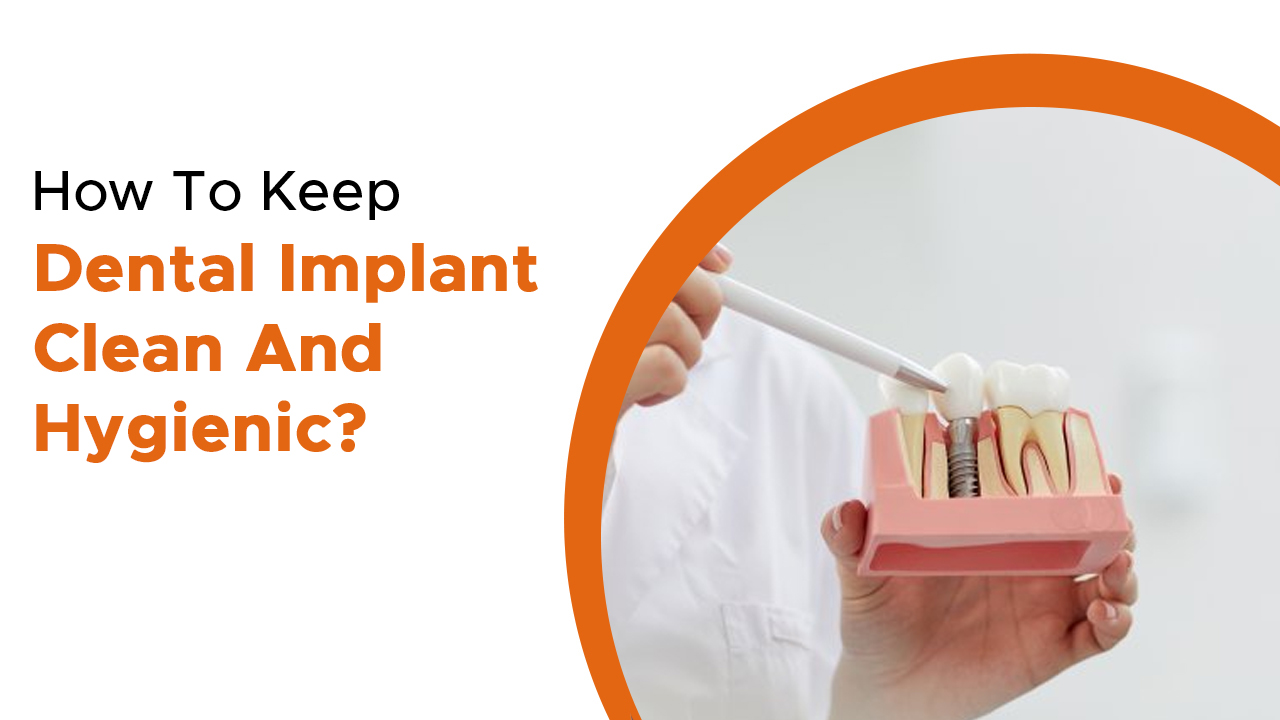
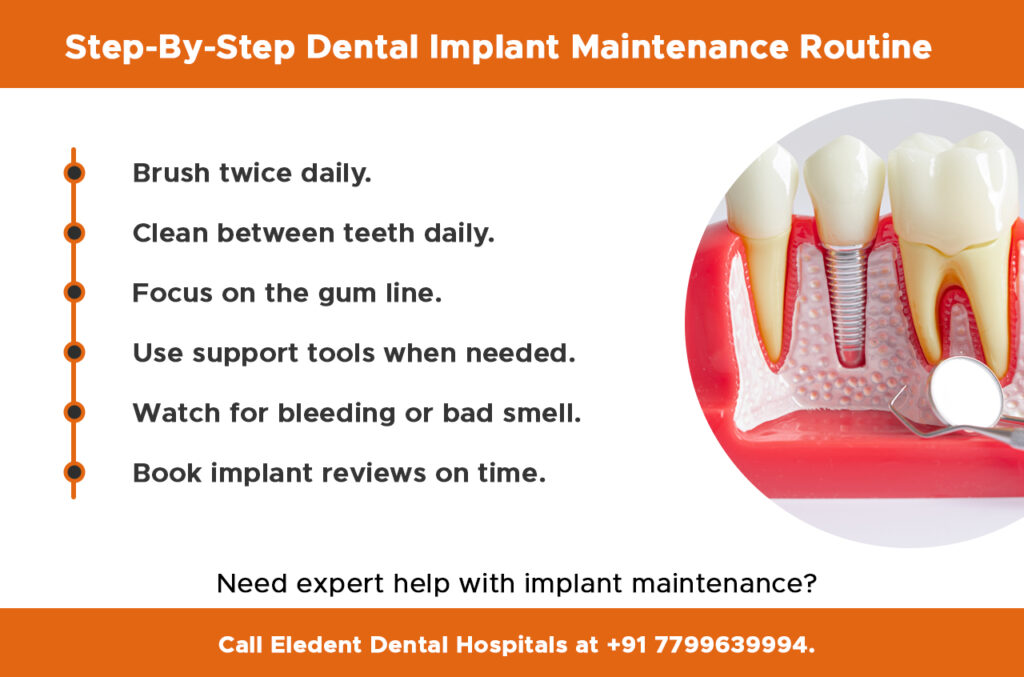
    The direct answer is simple. Keep a dental implant clean and hygienic by brushing twice daily, cleaning between the teeth every day, keeping the gum line plaque-free, and going for regular professional check-ups. Good implant care protects the gums and bone around the implant, not just the visible crown.

    Many people still worry even after getting an implant. Food may get stuck near the gum edge. The area may feel sore, smell bad, or never feel fully clean. Some patients think the implant cannot decay, so they assume basic brushing is enough. That is where problems start, because the implant crown may look clean while the tissue around it is getting inflamed.

    To ensure your implants remain pristine, Eledent Dental Hospital pairs advanced and painless dental implants with a dedicated “diagnosis-first” method. Hence, our specialists provide comprehensive guidance on hygiene while ensuring long term success through consistent, expert follow-ups. With CEREC CAD-CAM technology and award-winning patient care, Eledent remains by your side at every step of your recovery and beyond.

    This handy guide from one of our dental experts explains what to clean, how to clean it, what habits to avoid, and when to get the implant checked professionally.

    What Does It Really Mean To Keep A Dental Implant Clean And Hygienic?

    Keeping a dental implant clean means protecting the gum and bone around it from plaque and inflammation.

    A dental implant does not get cavities like a natural tooth. The real risk sits around it. If plaque and biofilm stay near the gum line, the gums can get inflamed first. If that continues, the bone support around the implant can also get affected. That is why a complete guide to caring for your dental implants should never stop at basic brushing advice.

    What matters most is this:

    • Clean the gum edge, not just the chewing surface.
    • Remove plaque every day before it hardens.
    • Keep food debris from staying trapped around the implant.
    • Watch for bleeding, swelling, or bad smell early.

    Patients comparing dental implants in Hyderabad often focus on the procedure first. Long-term success depends just as much on what happens after the implant is placed.

    What Daily Routine Keeps A Dental Implant Clean Every Day?

    A proper daily routine keeps plaque from sitting around the implant for too long.

    You do not need hard scrubbing. You need the right order, the right tools, and regular cleaning. The aim is to keep the implant crown clean and the gum line stable.

    Morning cleaning

    Start the day with gentle brushing around the implant and nearby teeth.

    • Use a soft-bristled toothbrush.
    • Angle the brush toward the gum line.
    • Clean the front, back, and sides of the implant crown.
    • Use light pressure so the gums do not get irritated.

    Night cleaning

    Night cleaning matters more because plaque and trapped food stay in the mouth longer while you sleep.

    • Brush slowly before bed.
    • Spend extra time where the crown meets the gum.
    • Clean between the implant and nearby teeth.
    • Rinse after the routine if your dentist has advised it.

    During the day

    Meals can leave small particles around the implant.

    • Rinse with plain water after meals when brushing is not possible.
    • Do not let sticky food sit around the implant for hours.
    • Check the area if food gets trapped often.

    Patients searching dental implant near me are often not just looking for treatment. They also want a routine that helps the implant stay clean, comfortable, and problem-free.

    Which Cleaning Tools Work Best For Dental Implants?

    The right cleaning tools make implant care easier and more effective.

    You do not need every tool at once. You need the tools that match your implant design, spacing, gum health, and hand control.

    Tool How it helps
    Soft toothbrush Cleans the implant crown and gum line gently every day.
    Electric toothbrush Helps if brushing is rushed or hand control is uneven.
    Non-abrasive toothpaste Cleans without being too harsh on the crown surface.
    Implant floss or super floss Helps clean around tight areas where a brush cannot reach.
    Interdental brush Works well for wider spaces beside the implant.
    Water flosser Flushes out food debris and supports deeper cleaning in hard-to-reach areas.
    Alcohol-free mouthwash Supports freshness and bacteria control when advised by a dentist.

    A water flosser is useful, but it is not a replacement for brushing or flossing. It works best as a support tool.

    For many people with dental implants in Kondapur, the problem is not lack of effort. It is using the wrong tool for the space they are trying to clean.

    How Do You Clean Different Types Of Dental Implant Restorations?

    Different implant restorations need different cleaning methods.

    This is one of the most missed parts of implant care. A single implant crown does not collect plaque in the same way as an implant bridge or removable overdenture.

    Implant Type Best Cleaning Approach
    Single implant crown Brush around the crown edge, clean both side contacts, and focus on the gum line daily.
    Implant-supported bridge Use a water flosser, floss threader, or interdental brush to clean under the bridge where plaque collects.
    Implant overdenture Remove the denture as advised, clean the denture itself, then clean the gums and implant attachments separately.

    Single implant crown

    This feels closest to a natural tooth, but the gum edge still needs special attention.

    • Brush around the full crown.
    • Clean where the implant meets the gum.
    • Do not ignore the side contacts.

    Implant-supported bridge

    This needs extra care under the prosthesis.

    • Clean under the bridge every day.
    • Use a threader or water flosser if access is difficult.
    • Check for trapped food after meals.

    Implant overdenture

    This needs two-part cleaning.

    • Clean the denture outside the mouth.
    • Clean the implant attachments and gums inside the mouth.
    • Follow the soaking and storage advice given by your dentist.

    Many people asking about dental implants in Manikonda do not realise this difference until they start cleaning the restoration at home.

    What Daily Habits Quietly Damage Implant Hygiene?

    Some implant problems build slowly because of daily habits, not because of one major mistake.

    The implant may feel fine for weeks. Then one day the gums start swelling, food starts trapping, or the area develops a bad smell. In many cases, the problem is not the implant itself. It is the daily routine around it.

    Habits that raise the risk of implant trouble:

    • Skipping night cleaning.
    • Brushing only the visible crown.
    • Smoking regularly.
    • Biting ice, nutshells, or very hard foods.
    • Leaving food trapped around the implant.
    • Ignoring grinding or clenching.
    • Missing review appointments.

    Smoking deserves special attention because it affects gum healing and blood flow. Teeth grinding matters too because too much pressure can overload the implant and surrounding structures.

    For some patients with dental implants in Kukatpally, the implant feels dirty even after brushing. That usually means the gum edge and contact points are not being cleaned well enough.

    What Warning Signs Mean Your Implant Needs A Dentist Visit?

    Bleeding, swelling, smell, or repeated food lodgement around an implant should not be ignored.

    Early treatment can stop a small gum issue from turning into a bigger implant problem. Many people delay the visit because the crown still feels fixed. That delay can make treatment more difficult later.

    Warning signs to watch for:

    • Bleeding while brushing near the implant.
    • Swelling at the gum line.
    • Bad taste or repeated bad smell.
    • Food getting stuck more than before.
    • Tenderness while chewing.
    • Gum recession around the implant.
    • A loose or shifting feeling.

    One mild episode of irritation may not mean failure. Repeated symptoms mean the area needs a proper check. The same applies whether someone got dental implants in Banjara Hills or any other branch area.

    How Often Do Dental Implants Need Professional Cleaning And Check-Ups?

    Most implants need professional review and cleaning every 3 to 6 months, depending on risk.

    Home care controls day-to-day plaque. Professional care checks the deeper picture. During these visits, the dentist reviews the gums, checks implant stability, assesses bone support, and safely removes deposits around the implant. Regular maintenance visits are already part of the current implant-care guidance connected with this topic.

    Professional visits may include:

    • Gum health review.
    • Implant cleaning with safe instruments.
    • Bite check if pressure feels uneven.
    • X-rays when bone support needs review.
    • Home-care corrections if plaque is still being missed.

    step-by-step-dental-implant-maintenance-routine

    Patients comparing best dental implants in Kompally should not only compare price or treatment speed. Long-term maintenance support matters just as much.

    Get Long-Term Implant Care Support At Eledent Dental Hospitals

    Good implant treatment does not end after the crown is fixed. It continues with follow-up care, maintenance visits, hygiene correction, and early problem detection. Eledent Dental Hospitals supports that journey with advanced technology such as integrated implantology, intra oral scanners, CEREC chairside CAD-CAM, Zoom teeth whitening, and digital 3D X-rays.

    If food keeps getting stuck, the gums feel sore, or the implant area never feels fully clean, get the right solution before the problem grows. For cleaner implants, healthier gums, and expert aftercare around dental implants in Hyderabad, contact Eledent Dental Hospitals at +91 7799639994.

    FAQs

    Can I use baking soda to clean a dental implant?

    It is better not to. Baking soda can feel like a quick fix, but repeated use may be too harsh for regular implant care.

    Is slight sensitivity normal around a dental implant after professional cleaning?

    Mild sensitivity can happen for a short time, especially if the gums were a little inflamed before the cleaning. It should settle soon, not keep getting worse.

    Do I need to replace my toothbrush more often if I have a dental implant?

    Yes, keeping the brush fresh matters. A worn toothbrush does not clean well around the gum line, so change it every 3 months or sooner if the bristles spread out.

    Can stress affect the health of my dental implant?

    Yes, it can. Stress can lead to clenching or grinding, and that extra pressure may affect the implant and the surrounding gums over time.

    Should I clean my implant differently when travelling?

    Keep the routine simple and consistent. Carry your brush, floss or interdental cleaner, and do not skip night cleaning just because your schedule changes.

  • Laser Gum Surgery Cost In Hyderabad

    Laser Gum Surgery Cost In Hyderabad

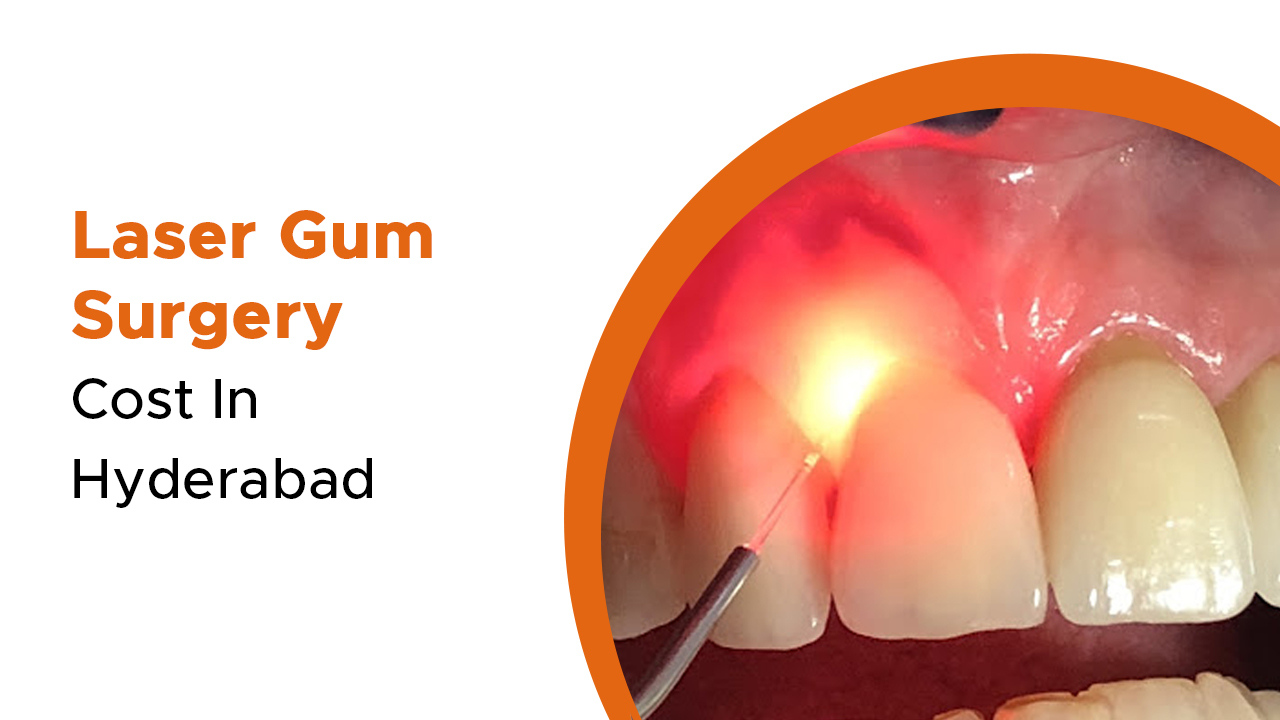
    If your gums bleed while brushing, look lower than before, or feel sore around certain teeth, the first thing you may want to know is the price. That is why many people search “How much does a gum recession treatment cost in Hyderabad ? before they book anything. The short answer is that the cost of laser gum treatment in Hyderabad depends on how advanced the gum problem is, how many areas need treatment, and whether you need simple laser therapy or deeper surgical care. It starts from INR 5000, and may go up to INR 30,000, depending on the case complexity and other factors.

    With 20+ years of expertise and 30,000+ smiles restored, Eledent Dental provides painless, precision-focused laser gum surgery across 5 Hyderabad branches. Experience advanced, specialist-led care and faster healing, available 12 hours daily.

    If you want to understand what affects the price, what you may actually be paying for, and how to choose wisely, read this guide from one of our certified experts, further.

    How Much Does Laser Gum Surgery Cost In Hyderabad?

    Simpler laser gum therapy for gum inflammation may fall around ₹1,500 to ₹6,000 at Eledent’s broader gum treatment range, while laser-assisted gum therapy at Hyderabad clinics is shown in a broader range of about ₹5,000 to ₹15,000 for moderate cases. More advanced laser flap style treatment can go much higher, around ₹25,000 to ₹40,000 depending on the number of quadrants and the severity of infection.

    A patient asking about laser gum treatment in Manikonda may see different prices because one clinic may be treating early gum inflammation, while another may be managing deeper pockets, recession, or bone loss.

    Treatment Level Cost In Hyderabad
    Early gum inflammation with simpler laser care ₹5,000 and ₹15,000 per quadrant
    Moderate gum infection with deeper cleaning and laser support ₹8,000 to ₹30,000+ for the full mouth
    Advanced laser-assisted flap or deeper periodontal surgery ₹10,000 to ₹25,000 per quadrant

    That is why the same treatment name can come with very different quotes. The real price depends on what your gums actually need.

    How Does The Cost Change For Mild, Moderate, And Severe Gum Problems?

    A person comparing laser gum treatment in Kondapur may feel confused when one estimate looks low and another looks much higher, but the stage of gum disease explains that difference. Our pricing for general gum treatment reflects this pattern because simple gum therapy is priced much lower than more advanced laser surgical care seen across Hyderabad.

    Severity Treatment Needed
    Mild Simple cleaning, root planning, or light laser support
    Moderate Deeper gum cleaning and more active laser therapy
    Severe Laser-assisted surgery, flap access, or added periodontal work

    If your gums only show early bleeding and shallow inflammation, the cost stays lower. If the gums have already pulled away or deep pockets have formed, treatment becomes more involved and the fee rises.

    What Factors Affect The Cost Of Laser Gum Treatment?

    The final fee changes because treatment is planned around your gums, not around a fixed package.

    The biggest cost drivers are:

    • Severity of gum disease
    • Number of teeth or gum areas treated
    • Type of laser and treatment method
    • Dentist or periodontist expertise
    • Follow-up reviews and cleaning support
    • Extra procedures if deeper damage is present

    A patient looking into laser gum treatment in Kukatpally may only need targeted gum therapy around a few areas. Another may need treatment across several sections of the mouth. That difference alone can change the final quote a lot. Clinics with advanced laser tools and specialist-led gum care may also charge more, but they provide more precise planning and structured follow-up.

    Laser Gum Surgery Vs Traditional Gum Surgery: What Changes In Cost And Experience?

    Many patients do not only compare price. They also compare how the treatment feels and how long recovery may take. That is where laser gum treatment and traditional gum surgery start to feel different. Someone checking laser gum treatment in Banjara Hills may accept a higher laser cost if the healing feels easier and the treatment feels more controlled. Our laser tools give gentle gum shaping and soft-tissue procedures, which supports this positioning.

    Factor Laser Gum Surgery Traditional Gum Surgery
    Tissue handling More precise More manual
    Bleeding Less Generally more
    Healing comfort Easier Slower
    Recovery time Shorter Longer
    Cost Higher Can be lower in simpler cases

    Traditional surgery may still be the right choice in some cases, especially when the problem is advanced and needs broad access. Laser treatment appeals to patients who want less bleeding, cleaner soft-tissue handling, and faster recovery.

    What Is Included In The Cost Of Laser Gum Surgery?

    This is one of the biggest areas of confusion. Many patients think they are only paying for the laser itself, but the total fee covers more than that.

    What may be included:

    • Consultation and gum evaluation
    • Clinical examination
    • Digital scans or X-rays if needed
    • Treatment planning
    • Laser procedure
    • Medicines if prescribed
    • Follow-up visits

    What may be separate in some clinics:

    • Extra deep cleaning
    • Additional periodontal procedures
    • Special post-treatment kits
    • Repeat imaging if needed later

    How To Choose The Best Dentist For Laser Gum Treatment In Hyderabad?

    Choosing the right dentist matters as much as choosing the treatment itself. If someone searches laser gum treatment in Kompally, they are not only comparing prices. They also want to know if the clinic will diagnose the problem properly and manage healing well after treatment.

    Check these points before you look for the best dentist for a laser gum treatment in Hyderabad::

    • Experience in gum treatment
    • Access to laser technology
    • Proper diagnosis before any surgery
    • Clear hygiene and sterilisation standards
    • Real patient reviews
    • Transparent pricing
    • Follow-up care after treatment

    A good clinic should not rush you into surgery. It should first tell you how serious the gum problem is, why laser care is being advised, and whether another treatment could still work. That level of clarity matters more than a low quote.

    Does Insurance Cover Laser Gum Surgery In Hyderabad?

    In India, routine dental treatment is excluded from standard health insurance, but some plans now include dental or periodontal treatment, especially when it is medically necessary and not purely cosmetic. Cashless cover is less common for routine dental care, so many patients need to check reimbursement terms instead.

    Before treatment, check if:

    • The procedure is medical or cosmetic under your policy.
    • Your plan offers dental cover or OPD dental cover.
    • The claim is reimbursement only.
    • Pre-approval is needed.
    • There are any documents your insurer wants.

    If your gum surgery is being done to treat infection, recession, or periodontal damage, you may have a stronger case for coverage than someone seeking cosmetic gum reshaping alone. Still, the safest step is to call your insurer before booking.

    Get Advanced Laser Gum Treatment At Eledent Dental Hospitals

    Eledent Dental Hospitals brings laser based gum solution with a specialist led place across Hyderabad. Eledent ensures a painless, precision-focused experience using advanced laser gum therapy and modern soft-tissue tools. With 20+ years of expertise, our specialists provide clear upfront estimates and structured follow-up care across 5 Hyderabad locations, ensuring a transparent and smooth recovery.

    If bleeding gums, recession or gum infection are making you delay treatment because of price confusion, book a consultation at Eledent Dental Hospitals on +91 7799639994 and get a clearer treatment plan before the problem grows.

    FAQs

    How long does a laser gum surgery session usually take?

    Most sessions take about 30 to 90 minutes, depending on how many areas need care. Your dentist will give a clearer idea after checking your gums.

    Will I need multiple sittings for laser gum treatment?

    It depends on the severity and spread of the problem. Some patients need just one visit, while others may need staged treatment.

    Are there any food restrictions after laser gum surgery?

    Yes, you may need to stick to soft foods for a few days. Avoid hot, spicy, or hard foods until your gums feel stable again.

    Can laser gum surgery fix gum recession completely?

    It can improve gum health and reduce further damage. In some cases, additional procedures may be needed for full coverage.

    Is laser gum treatment safe for people with sensitive teeth?

    Yes, it is generally safe and often gentler on tissues. Many patients with sensitivity find it more comfortable than traditional methods.

  • Zirconia Dental Crown Cost In Hyderabad

    Zirconia Dental Crown Cost In Hyderabad

    A damaged tooth can make daily life harder than most people expect. You may chew on one side, avoid hot or cold foods, or worry that the tooth may crack further. That is when many people start searching dental crowns: types, cost, treatment because they want more than temporary relief. They want to know the real cost, which zirconia crown suits their tooth, and whether the treatment is worth choosing.

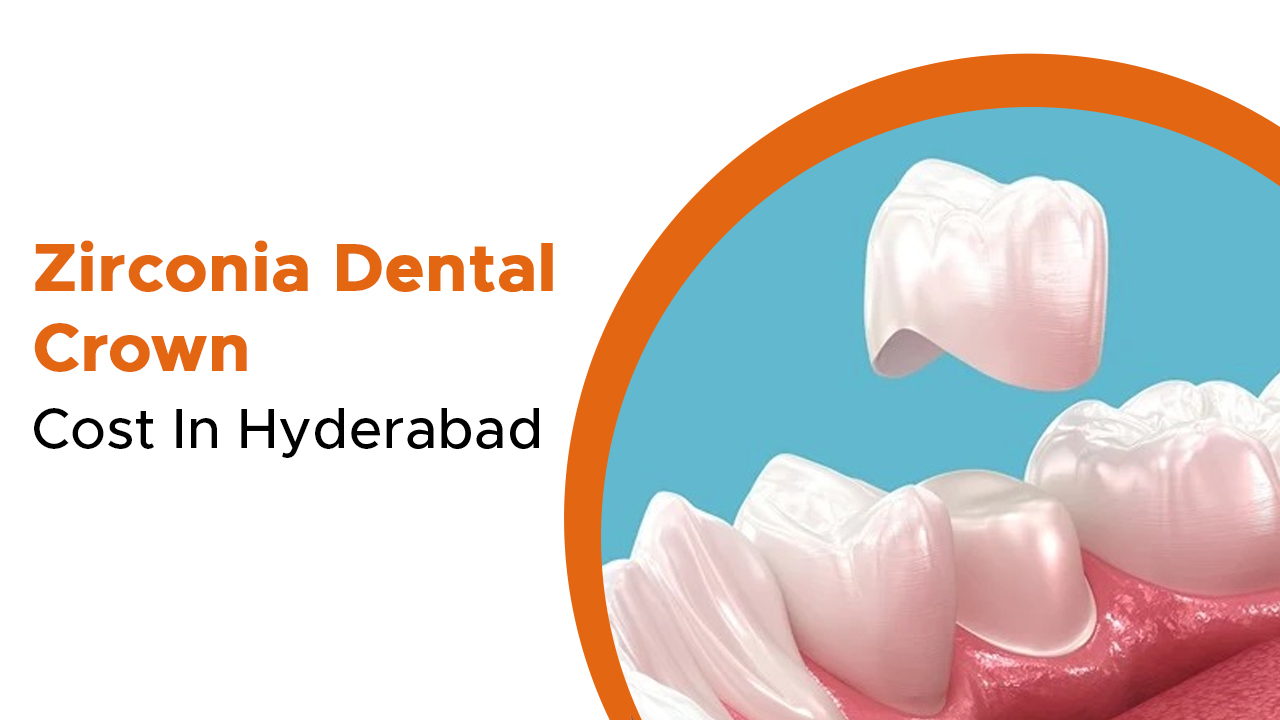
    The direct answer is this: zirconia dental crown cost in Hyderabad usually ranges from ₹8,000 to ₹25,000 per tooth, depending on the zirconia type, tooth position, lab quality, and whether extra work is needed before crown placement.

    At Eledent Dental Hospitals, current listed zirconia options start at ₹8,000 for Basic, ₹12,000 for Monolith, and ₹18,000 for Platinum Plus, with consultation starting around ₹300. This blog is written by an expert dentist from Eledent Dental Hospitals.

    Read on to understand crown types, what affects the fee, when zirconia is worth choosing, and how long it can last.

    What Is The Cost Of Different Types Of Zirconia Crowns In Hyderabad?

    The direct answer is that a zirconia crown in hyderabad usually costs between ₹8,000 and ₹25,000 per tooth, but the exact fee changes with the crown type, translucency, lab process, and aesthetic demand.

    Not every zirconia crown is made the same way. A strong back-tooth crown usually costs less than a premium front-tooth crown because front teeth need better translucency, finer shade layering, and more natural light reflection. Standard zirconia is usually chosen more for strength. Premium CAD-CAM or high-translucency zirconia is chosen more for aesthetics and a more lifelike finish.

    Here is a simple price guide:

    Crown Type Objective Cost Range
    Standard zirconia crown Back teeth needing strength ₹8,000 to ₹12,000
    Layered or porcelain-layered zirconia Better front-tooth aesthetics with strength ₹10,000 to ₹15,000
    Full contour or monolithic zirconia Grinding cases and heavy biting load ₹12,000 to ₹18,000
    Premium high-translucency CAD-CAM zirconia Front teeth and high aesthetic demand ₹15,000 to ₹25,000+
    Implant-supported zirconia crown Implant restorations ₹10,800 to ₹35,000+

    Patients comparing zirconia crowns should know that the fee changes not only because of the clinic, but because the material type, translucency level, and design method change the final result.

    Why Does Zirconia Crown Cost More And What Does The Treatment Cost Include?

    Zirconia crowns cost more because they combine strong material, precise CAD-CAM design, and better long-term durability than many lower-cost crown options.

    The price is not just for the final crown. It also covers the planning and fabrication quality behind it. Zirconia usually needs digital design, careful tooth preparation, accurate margin finishing, and stronger milling support. Premium cases also need shade selection and contour work that help the crown blend better with nearby teeth. That is why zirconia often costs more than PFM or simpler ceramic options.

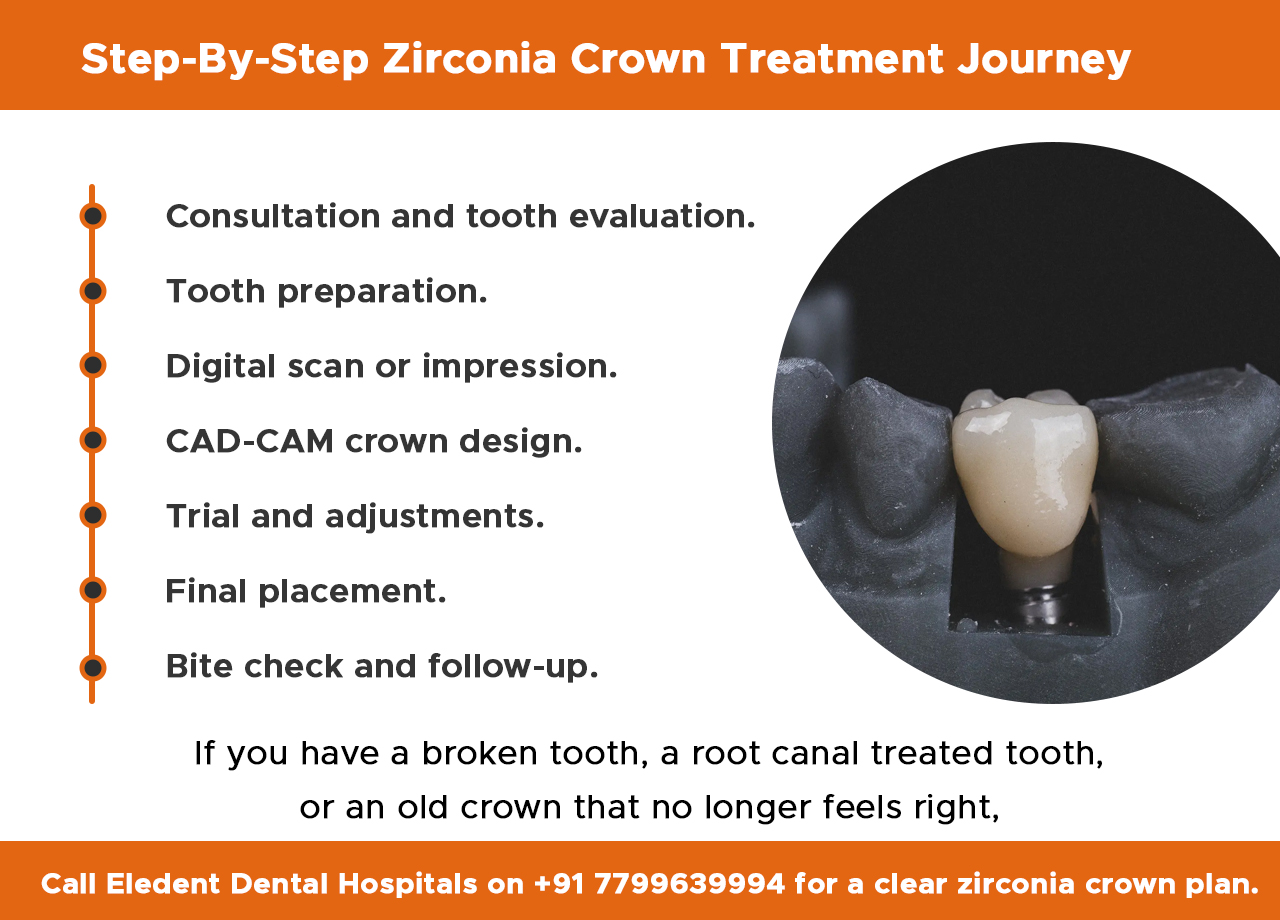
    What the treatment cost usually includes:

    • Initial consultation and tooth evaluation.
    • Dental imaging, digital scan, or impression.
    • Tooth preparation and reshaping.
    • Temporary crown in many cases.
    • Final lab-fabricated or CAD-CAM zirconia crown.
    • Trial, fitting, and bite adjustment.
    • Final cementation of the crown.
    • Professional and lab fees.

    What may cost extra:

    For a patient exploring zirconium crown in kondapur, this matters because the fee is not only for a tooth-coloured cap. It includes the steps that improve fit, function, and long-term performance.

    step-by-step-zirconia-crown-treatment-journey


    What Factors Affect The Cost Of Zirconia Dental Crowns?

    The cost changes from patient to patient because the crown does not sit on every tooth in the same way.

    A molar that handles heavy chewing force needs a different zirconia design from a front tooth in the smile zone. A weak root canal treated tooth may first need a core build-up. A patient with strong grinding habits may need a monolithic design instead of a more delicate layered one. These details change the treatment plan and the quote.

    The biggest cost drivers are:

    Cost Driver Why It Changes The Fee
    Tooth position Front teeth need finer shade and translucency work.
    Aesthetic demand Smile-zone crowns need more natural contour and finish.
    Need for build-up Weak teeth may need extra support before the crown.
    Zirconia type Standard, layered, monolithic, and premium options vary in price.
    Lab or CAD-CAM quality Better precision and finishing raise the cost.
    Dentist expertise Accurate preparation and bite balance improve outcomes.
    Bite force Heavy grinders may need stronger crown planning.

    For a patient checking zirconium crown in manikonda, the price can go up when the tooth needs extra support, a more aesthetic finish, or more customised lab work.

    When Should You Choose Zirconia Crown And When Should You Not?

    Choose a zirconia crown when you need high strength, good aesthetics, and long-term durability, especially on back teeth or if you grind your teeth.

    Zirconia is a strong option for molars because it handles high chewing pressure well. It is also a good metal-free choice for patients who want strength without a metal base. Modern zirconia can also work very well on front teeth, especially when high-translucency or multilayer options are used. It usually needs only about 0.5 mm to 1.0 mm of tooth reduction in many cases, which can help preserve more natural tooth structure.

    Zirconia is often the right choice when:

    • The crown is for a molar or premolar.
    • The patient grinds or clenches.
    • A metal-free restoration is preferred.
    • Good strength and decent aesthetics are both needed.
    • Long-term durability matters more than the lowest price.
    • The patient regularly drinks coffee, tea, or similar staining drinks.

    Think twice before choosing zirconia when:

      • Maximum front-tooth translucency matters more than strength.
      • The case may suit lithium disilicate or another ceramic better.
      • The budget is very limited.
      • Space clearance is too tight for ideal design.
      • The underlying tooth is heavily discoloured and needs a different masking strategy.
    Dental Problem Best Crown Solution
    Back tooth with heavy chewing force Zirconia
    Teeth grinding or clenching Monolithic zirconia
    Front tooth needing strength and good aesthetics High-translucency zirconia
    Front tooth needing the most lifelike translucency All ceramic or E-max in selected cases
    Metal allergy concern Zirconia or all ceramic
    Lower-budget crown need PFM in selected cases

    A patient comparing zirconium crown in banjara hills should not assume zirconia is always the best option just because it sounds premium. The right crown is the one that suits the tooth, bite, and smile demands properly.

    How Long Can A Zirconia Crown Last And What Affects Its Life?

    A zirconia crown typically lasts 10 to 15 years or longer, and many well-made crowns can last over 20 years with good care.

    Its long life depends on more than just material strength. Even a strong crown can fail early if the fit is poor, the bite is high, or the tooth underneath is not healthy. Studies often show high long-term survival for zirconia, but daily habits still matter.

    The biggest factors that affect crown life are:

        • Teeth grinding or clenching, which can increase stress on the crown.
        • Oral hygiene, which protects the tooth and gum around the crown.
        • Regular dental reviews every 6 months.
        • Avoiding habits such as chewing ice or very hard foods often.
        • Precision of the initial fit and bite adjustment.
        • The condition of the tooth underneath.

    What helps a zirconia crown last longer:

        • Brush twice daily.
        • Floss around the crown margin every day.
        • Get the bite checked if the crown feels high.
        • Use a night guard if you grind your teeth.
        • Do not ignore food lodgement or gum bleeding around the crown.

    If you are considering zirconium crown in kompally, ask not only how much the crown costs, but also how the clinic plans fit, bite balance, and follow-up care. Those details strongly affect how long the crown lasts.

    Restore Your Tooth Confidently At Eledent Dental Hospitals

    A damaged tooth needs more than a crown. It needs the right planning, the right preparation, and a restoration that fits your bite properly. At Eledent Dental Hospitals, zirconia crown treatment is supported by digital scans, CAD-CAM based workflows, and a cleaner planning process that helps improve fit, margin accuracy, and overall aesthetics. The team focuses on matching the crown to your tooth position, chewing load, and smilemakeover needs instead of using a one-type-fits-all approach. If you want a stronger and more natural-looking solution for a damaged tooth, choose Eledent Dental Hospitals and call +91 7799639994 for a proper crown evaluation.

    FAQs

    Can a zirconia crown be removed later if the tooth underneath needs treatment?

    Yes, it can be removed if the tooth underneath needs care. The process depends on how the crown was cemented and how much natural tooth structure remains.

    Will a zirconia crown feel bulky at first?

    It may feel slightly different for a few days. If it still feels bulky or awkward after that, the shape or bite may need adjustment.

    Can a zirconia crown stain like a natural tooth?

    Zirconia resists staining better than natural enamel. Surface deposits can still collect if oral hygiene is poor, so regular cleaning still matters.

    Do I need a night guard after getting a zirconia crown?

    You may need one if you grind or clench your teeth at night. A night guard helps protect both the crown and the surrounding teeth.

    Can food get stuck around a zirconia crown even if it is new?

    Yes, it can happen if the contact point or crown margin needs correction. If food keeps trapping in one area, the crown should be checked.

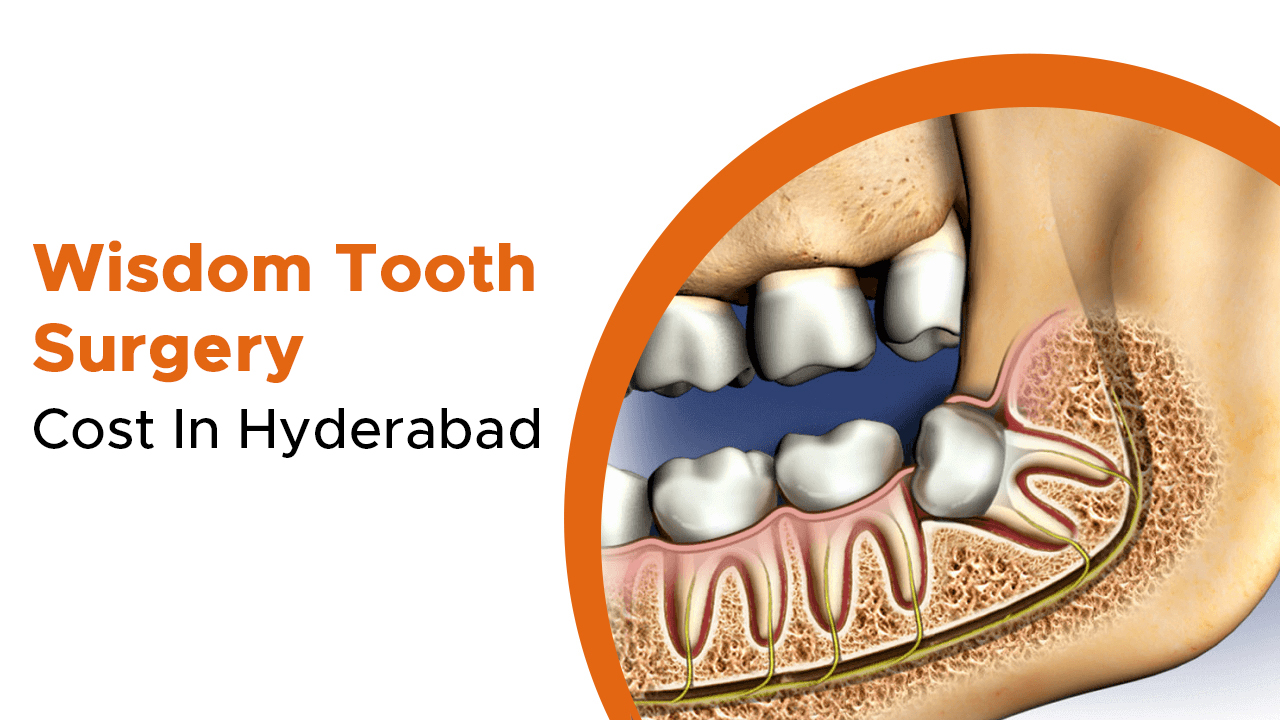
  • Wisdom Tooth Surgery Cost In Hyderabad

    Wisdom Tooth Surgery Cost In Hyderabad

    Pain at the back of the jaw can make chewing, swallowing, sleeping, and even opening the mouth feel difficult. Most people do not just want the tooth removed. They want to know the real cost, whether surgery is necessary, and how to avoid choosing the wrong clinic.

    The direct answer is that wisdom tooth surgery cost breakdown in Hyderabad usually falls between ₹3,000 and ₹15,000 per tooth, depending on impaction depth, tooth angle, surgical difficulty, and imaging needs.

    At Eledent Dental Hospitals, patients benefit from 19+ years of clinical experience, 30,000+ smiles restored, and access across 5 Hyderabad locations for timely care. This blog is written by an expert dentist from Eledent Dental Hospitals.

    Read on to understand what affects the fee, what the quote should include, and how to choose safer treatment with more confidence.

    How Much Does Wisdom Tooth Surgery Cost In Hyderabad?

    The direct answer is that wisdom tooth surgery in Hyderabad usually costs between ₹3,000 and ₹15,000 per tooth. The price changes because not all wisdom teeth are removed in the same way.

    A fully erupted tooth that is easy to grip and deliver usually costs much less than a tooth buried inside bone, tilted sideways, or positioned close to the mandibular nerve. In real terms, the quote reflects surgical difficulty more than pain level.

    Type Of Removal What The Dentist Usually Has To Do Cost Range
    Simple extraction Loosen and remove a visible tooth ₹2,000 to ₹4,500
    Soft tissue impaction Open a small gum flap to access the crown ₹4,000 to ₹7,000
    Partial bony impaction Remove some bone and deliver the tooth carefully ₹6,000 to ₹10,000
    Complete bony impaction Raise a flap, remove more bone, section the tooth if needed ₹8,000 to ₹12,000+
    Horizontal or complex impaction Section the tooth and protect nearby nerve or second molar area ₹7,000 to ₹15,000+

    Patients comparing wisdom teeth removal in Hyderabad often see very different quotes online. That usually happens because one quote is for a straightforward extraction, while another includes flap elevation, bone guttering, tooth sectioning, sutures, medicines, and follow-up review.

    What Is The Cost Difference Between Simple Extraction And Surgical Wisdom Tooth Removal?

    The simple extraction costs less because the tooth is easier to access and remove. Surgical removal costs more because the dentist may need to open the gum, remove bone, or divide the tooth before taking it out.

    Simple extraction Surgical removal
    The tooth is fully visible in the mouth. The tooth is partly or fully trapped under gum or bone.
    The dentist can usually remove it without cutting the gum. The dentist may need to open the gum to reach the tooth.
    Bone removal is usually not needed. Some bone may need to be removed for access.
    The tooth often comes out in one piece. The tooth may need to be divided into smaller sections before removal.
    The procedure is usually quicker. The procedure usually takes more time because it is more complex.
    Recovery is often simpler and faster. Recovery may take longer because the surgical site is deeper.
    The cost is usually lower. The cost is usually higher because the case needs more planning and surgical work.

    What Factors Affect The Cost Of Wisdom Tooth Surgery?

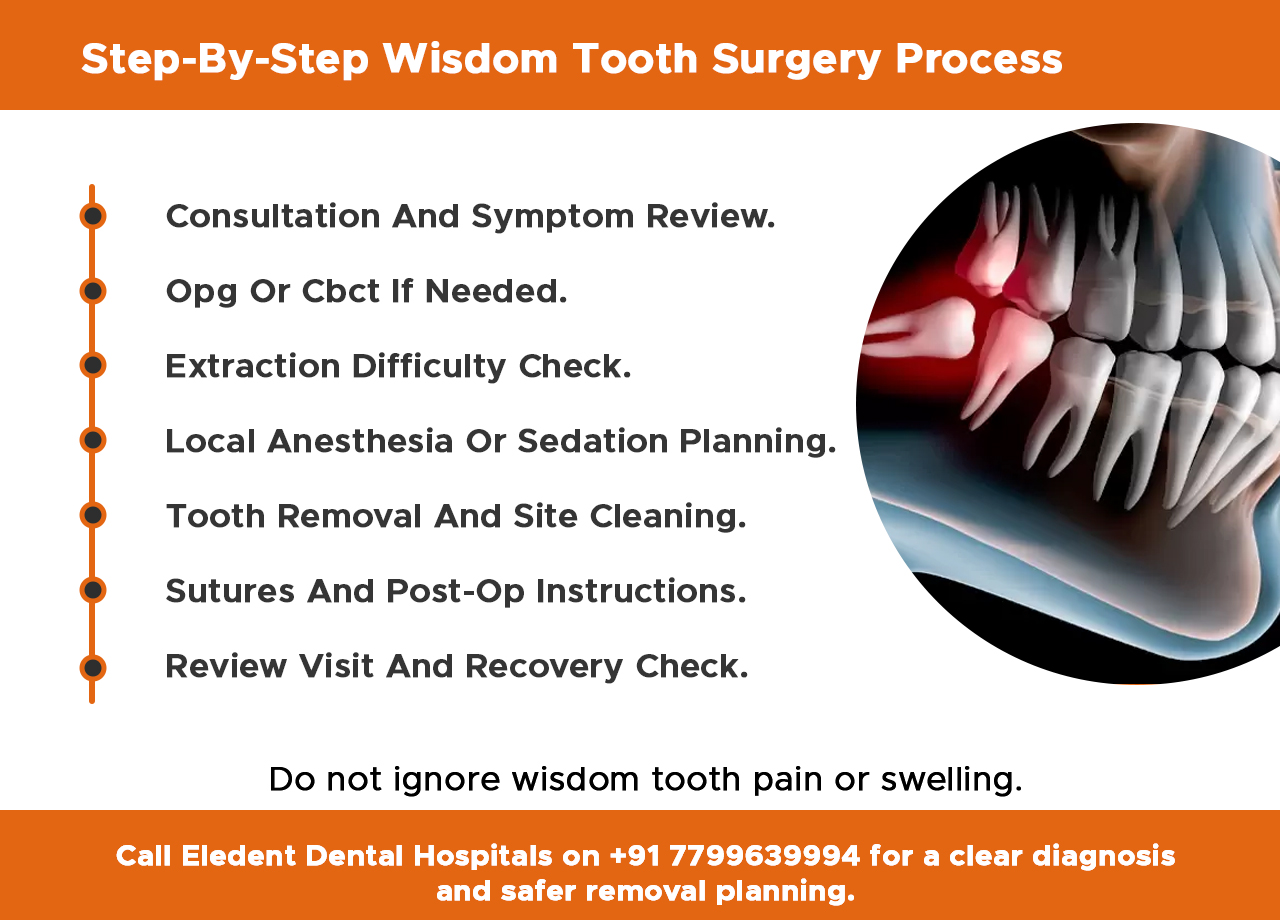
    The main factors are impaction depth, tooth angle, root shape, nerve proximity, imaging needs, surgical time, and whether the case needs a more advanced approach.

    A wisdom tooth that is fully erupted usually takes less time and fewer instruments. A tooth that lies at a 90-degree angle against the second molar often needs more planning, more bone removal, and more controlled sectioning. That increases both treatment time and clinical difficulty.

    The biggest cost drivers are:

    • Impaction level: A tooth under gum alone usually costs less than one buried in bone.
    • Tooth angulation: Vertical teeth are often easier than mesioangular, distoangular, or horizontal impactions.
    • Root anatomy: Curved, divergent, or bulbous roots can make removal harder.
    • Nerve relation: Lower wisdom teeth near the inferior alveolar nerve may need more careful planning.
    • Imaging type: OPG may be enough in many cases, but CBCT adds detail when the nerve or root position needs closer study.
    • Surgical steps: Bone cutting, flap elevation, tooth sectioning, irrigation, and suturing all add to complexity.
    • Sedation needs: Advanced sedation raises the total cost beyond local anesthesia alone.
    • Number of teeth removed: Removing two or four teeth together changes both planning and cost.

    A patient exploring wisdom teeth removal in Kukatpally may first hear a basic estimate, then receive a different final quote after imaging shows deep impaction or close nerve relation. That is not random pricing. It reflects the actual surgical work needed. At Eledent, digital X-rays help the team assess the angle of the tooth, the relation to nearby structures, and the safest removal method before treatment begins.

    What Is Included In The Cost Of Wisdom Tooth Surgery?

    The total cost usually includes diagnosis, imaging review, local anesthesia, the surgical removal itself, and basic follow-up care.

    Patients often compare only the extraction fee, but the actual value lies in what the quote covers. A proper wisdom tooth surgery fee should not sound vague. It should tell you what is included before treatment begins.

    A standard quote may include:

    • Consultation and oral examination.
    • OPG review, or CBCT advice if required.
    • Local anesthesia for the procedure.
    • Gum opening and bone removal if needed.
    • Tooth sectioning if the crown or roots cannot be removed in one piece.
    • Sutures if the site needs closure.
    • Basic medicines for pain and swelling control.
    • One review visit for healing assessment.

    When Can The Cost Go Higher Than Expected?

    The cost usually rises when the tooth is deeper, more difficult, closer to the nerve, or more surgically demanding than it first appeared.

    This happens most often in lower wisdom teeth with deep bony impaction, sideways angulation, or close proximity to the nerve canal. A case may also become more expensive if multiple teeth are removed in one session or if advanced sedation is added.

    Situations that can increase the cost include:

    • Deep complete bony impaction.
    • Horizontal tooth position.
    • Roots close to the inferior alveolar nerve.
    • Need for CBCT after OPG review.
    • More bone removal than first expected.
    • Tooth sectioning into multiple pieces.
    • Removal of two or four wisdom teeth together.
    • Additional sedation beyond local anesthesia.

    Patients asking for a wisdom tooth surgery cost breakdown in Hyderabad should not judge value only by the lowest number. A lower quote that excludes imaging, sutures, medicines or review visits may not stay lower by the end.

    How Do You Choose The Right Dentist For Wisdom Tooth Removal In Hyderabad?

    The right dentist is the one who can read the imaging properly, explain the difficulty honestly, plan the surgery safely, and manage healing well after removal.

    Cost matters, but surgery safety matters more. A wisdom tooth close to the nerve, second molar, or sinus should not be treated like a routine tooth extraction. The planning stage tells you a lot about the clinic.

    Check these points before choosing:

    • The case is assessed with OPG, and CBCT is advised when the nerve or root position is unclear.
    • The dentist explains whether it is a simple extraction or a surgical impaction case.
    • The clinic can describe the tooth angle clearly, such as vertical, mesioangular, distoangular, or horizontal.
    • The quote includes what is covered and what may raise the price.
    • The surgical setup is sterile and structured.
    • The aftercare instructions are clear and specific.
    • Follow-up support is available if swelling, limited mouth opening, or dry socket symptoms appear.

    If you are comparing wisdom teeth removal in Manikonda, ask who will actually perform the surgery, what imaging will be used, and whether the estimate already includes the expected surgical steps.

    How Is Wisdom Tooth Surgery Planned Step By Step?

    Wisdom tooth surgery is planned through symptom review, imaging, difficulty assessment, anesthesia planning, removal, closure, and follow-up.

    A good surgery plan is not rushed. The pain level alone does not tell the full story. Some teeth hurt badly even when removal is simple. Others cause mild symptoms but turn out to be deeply impacted on imaging.

    Consultation and Symptom Review

    The dentist checks pain, swelling, food lodgement, mouth opening, gum infection, and pressure on the second molar.


    Imaging and Difficulty Assessment

    An OPG is commonly used first. If the roots appear close to the nerve canal or the anatomy looks unclear, a CBCT may be advised for better 3D assessment.


    Surgical Planning

    The dentist decides whether the case needs a flap, bone removal, sectioning, local anesthesia alone, or extra sedation support.


    Tooth Removal and Site Cleaning

    The gum is opened if needed, the bone is trimmed in a controlled way, the tooth is delivered whole or in sections, and the site is cleaned thoroughly.


    Sutures and Post-op Instructions

    If the area needs closure, sutures are placed. The patient is then given instructions on gauze pressure, ice pack timing, food texture, mouth opening care, and medicine use.


    Review Visit and Healing Check

    A follow-up visit checks swelling control, healing progress, and whether the socket is settling normally.


    step-by-step-wisdom-tooth-surgery-process

    Choose Eledent Dental Hospitals For Safer Wisdom Tooth Surgery In Hyderabad

    Jaw pain, swelling, food lodgement, or difficulty opening the mouth should not be ignored when a wisdom tooth is trapped or infected. Get a safer treatment plan with Eledent Dental Hospitals, where wisdom tooth cases are assessed with digital OPG support, CBCT when deeper nerve planning is needed, surgeon-led evaluation, and clear post-op guidance with follow-up support.

    If you need safer wisdom teeth removal in Banjara Hills or wisdom teeth removal in Kompally, choose Eledent Dental Hospitals and call +91 7799639994 for a clearer estimate and a better surgical plan.

    FAQ

    Can I go to work the next day after wisdom tooth surgery?

    Many people can return to light work the next day if the surgery was simple. If the removal was deeper or more difficult, resting for a day or two is often better.

    Will wisdom tooth surgery change my face shape?

    No, it will not change your face shape in any major way. You may notice temporary swelling after surgery, but that settles as healing improves.

    Can I brush my teeth on the day of wisdom tooth surgery?

    Yes, but do it carefully. Avoid brushing directly over the surgical area on the first day and keep the rest of your mouth as clean as possible.

    Is bad breath normal after wisdom tooth removal?

    A mild bad smell can happen for a short time during healing. If the smell becomes strong or stays for days, the area should be checked.

    Can I get all four wisdom teeth removed in one visit?

    Yes, that is possible in many cases. The decision depends on pain level, tooth position, overall health, and the surgeon’s plan.

  • Clear Aligners: Transforming Smiles with Advanced Technology

    Clear Aligners: Transforming Smiles with Advanced Technology

    Many people want straighter teeth but do not want metal braces showing in office meetings, college photos, family functions, or daily conversations. They also worry about whether clear aligners can really fix crowding, gaps, or bite issues in a predictable way. Clear aligners solve this by using custom-made, removable trays that move teeth in small planned stages with digital precision.

    At Eledent Dental Hospitals, aligner care is backed by 19+ years of clinical experience, 30,000+ smiles restored, and 5 locations across Hyderabad for easier reviews and follow-ups. This blog is written by an expert dentist from Eledent Dental Hospitals.

    Read on to understand how aligners work, what technology makes them more precise, who they suit best, and when fixed braces may still be the better option.

    How Do Clear Aligners Transform Your Smile?

    Clear dental aligners transformed your smile by applying gentle, calculated force that moves teeth into better positions over time.

    How clear aligners can improve your teeth alignment:

    • Mild to moderate crowding where teeth overlap.
    • Small to moderate gaps between teeth.
    • Relapse after old braces when teeth have shifted again.
    • Selected overbite, crossbite, or mild bite imbalance cases.
    • Smile symmetry where tooth positions need controlled correction.

    Each aligner is slightly different from the other. That small difference is what creates movement of teeth. In most systems, one tray is worn for 7 to 14 days before shifting to the next stage. Each stage moves teeth by a fraction of a millimetre, which keeps the correction controlled rather than aggressive. This staged movement can improve mild to moderate crowding, close smaller spaces, and correct selected bite problems.

    The smile change is not only visual. When crowded teeth are aligned better, brushing reaches more surfaces and floss can pass more normally between teeth. That reduces areas where plaque tends to sit for long periods. If the bite becomes more balanced, it can also reduce uneven enamel wear on overloaded teeth.

    That is why many adults consider invisalign treatment in Hyderabad when they want straighter teeth without a visibly metal look.

    What Advanced Technology Makes Clear Aligner Treatment More Accurate And Predictable?

    Advanced technology improves clear aligner treatment by making diagnosis, planning, fit, and follow-up more precise.

    Aligners are only as good as the plan behind them. A clear tray without good planning is just plastic. The real accuracy comes from digital systems that map the teeth, bite, and planned movement before treatment begins.

    Technology Clinical Value
    Intraoral digital scanning Builds a detailed 3D model with fewer impression errors.
    3D treatment simulation Maps movement stage by stage before the first tray is made.
    CBCT in selected cases Helps assess roots, bone limits, and movement safety.
    Advanced aligner material Delivers steadier force across each wear cycle.
    Attachments and bite features Improve control over rotations, extrusion, and bite correction.

    The first major shift is digital scanning. Intraoral scanners capture a 3D model of the teeth and bite without putty impressions. That reduces distortion and gives better detail of tooth shape, angulation, and contact points. In selected cases, CBCT adds more depth because it shows roots and surrounding bone, which matters when movements need more safety control.

    The second major shift is digital treatment simulation. This lets the dentist break movement into stages instead of guessing how teeth may respond. Attachments, bite features, and aligner modifications can then be placed more intelligently. At Eledent Dental Hospitals, the digital workflow includes intraoral scanning and in-house CBCT support, which helps turn smile correction into a more planned and measurable process. For patients comparing invisalign treatment in Kondapur, this kind of digital planning can make treatment easier to understand before it even starts.

    How Does Invisalign Treatment Work Step By Step?

    Invisalign treatment works through diagnosis, digital planning, custom tray wear, review visits, and retainers after the active phase ends.

    Consultation and Assessment

    The first step is to decide whether the case is suitable for aligners.

    The dentist checks crowding, spacing, bite relationship, gum health, enamel condition, and whether any fillings, extractions, or cleaning are needed. Photos and bite records may also be taken so the starting condition is documented properly.

    Digital Scan and Smile Preview

    A digital scan creates a 3D model of the teeth and bite.

    This model is used to study alignment from multiple angles. In many cases, patients also get a visual smile preview. That helps them see the direction of movement rather than starting treatment blindly.

    Custom Treatment Planning

    The dentist plans each tooth movement in sequence.

    That means deciding which teeth move first, how much movement is safe per stage, where attachments may be needed, and whether the bite needs extra features such as bite ramps or precision cuts.

    Aligner Fabrication and Fitting

    A series of custom aligners is made from the approved digital plan.

    At the fitting visit, the dentist checks tray seating, comfort, retention, and whether attachments need to be bonded. If attachments are placed, they are usually small and tooth-coloured.

    Active Wear and Tray Changes

    Each aligner is usually worn for 20 to 22 hours a day.

    Patients remove trays only for meals, drinks other than water, brushing, and flossing. Most cases shift to the next set every 7 to 14 days. If trays are worn casually, the next tray may feel too tight or may not seat fully.

    Review Visits and Refinements

    Review appointments check whether teeth are tracking properly.

    These visits are often scheduled every 6 to 8 weeks, depending on the plan. If a few teeth need more detailing near the end, refinement trays may be added.

    Retainers After Treatment

    Retainers keep the corrected tooth positions stable after active treatment ends.

    Without retainers, teeth can drift back because the surrounding fibres and bite forces still influence position.

    step-by-step-clear-aligner-treatment-process
    So if you are also looking forward to having an invisalign treatment in Manikonda for great orthodontic experience.

    Who Is The Right Candidate For Clear Aligners?

    Clear aligners are usually best for adults and teens with mild to moderate correction needs who can wear the trays for the required hours every day.

    The best candidate is not defined only by crooked teeth. The person also needs good oral hygiene, healthy gums, and the routine discipline to wear a removable appliance properly. Since aligners are not fixed, they only work when they stay in the mouth long enough.

    Clear aligners usually suit:

    Case Type Why Aligners May Work Well
    Mild to moderate crowding The movement can be staged predictably.
    Small gaps Space closure can often be controlled well.
    Mild crookedness Simpler movement patterns usually respond better.
    Relapse after braces Small shifts after past treatment often suit aligners.
    Adults wanting discretion The trays look more subtle in social and work settings.

    A good candidate should usually have:

    • Healthy gums with no active infection.
    • Teeth clean enough for orthodontic movement.
    • Fully erupted permanent teeth in most cases.
    • The ability to wear trays for 20 to 22 hours a day.
    • A routine that supports brushing before reinserting trays.

    Patients exploring invisalign treatment in Kukatpally should focus on case suitability and daily discipline, not only on the cosmetic appeal of invisible treatment.

    When Might Braces Work Better Than Aligners?

    Braces can work better than aligners when the case needs stronger, fixed, and more complex movement control.

    Clear aligners are effective in many cases, but fixed braces still remain stronger for difficult tooth movements. Since braces stay attached to the teeth full-time, they do not depend on patient wear time and they can deliver more controlled force in severe cases.

    Braces may be the better option when:

    • Crowding is severe.
    • The bite problem is complex.
    • Teeth need major rotation.
    • Vertical movement is difficult.
    • Root control needs more force precision.
    • The patient may not wear aligners properly..

    A person considering invisalign treatment in Banjara Hills may still be a better candidate for braces if the correction needs more force and less dependence on tray wear.

    What Is Daily Life Like With Invisalign Treatment?

    Daily life with Invisalign feels manageable for most patients, but it depends on wearing the trays for the required hours every day.

    The main benefit is convenience. The trays are removable, smooth, and less visible than braces. The main challenge is routine discipline. If trays are left out too long, treatment slows down and the next aligner may stop fitting correctly.

    A typical day with aligners looks like:

    • Wearing the trays for 20 to 22 hours.
    • Removing them before meals and drinks other than water.
    • Brushing and flossing before reinserting them.
    • Cleaning the trays with lukewarm water or the advised cleaner.
    • Keeping the tray case nearby to avoid loss or damage.
    • Changing to the next set on the scheduled date.

    What patients often notice early:

    • Mild pressure for the first 24 to 48 hours with a new tray.
    • Slight speech change that settles quickly.
    • More awareness of snacking because reinsertion needs cleaning.
    • Better routine once wear time becomes structured.

    Book Clear Aligner Treatment At Eledent Dental Hospitals

    Want straighter teeth without the daily visibility of metal braces? Get a digitally planned clear aligner solution at Eledent Dental Hospitals. The group strengthens smile correction with 9,500+ braces and aligner cases, 5,000+ digital smile design cases, certified Invisalign providers, and in-house CBCT support for better planning in selected cases.

    Those strengths add depth beyond basic cosmetic appeal and help patients understand that treatment quality depends on diagnosis, planning, and follow-up, not just on receiving trays. For expert invisalign treatment in Hyderabad, call Eledent Dental Hospitals on +91 7799639994.

    FAQ

    How often do I need to visit the dentist during aligner treatment?

    Most patients need check-ups every 6 to 8 weeks. These visits help track progress and make small adjustments if needed.

    Can clear aligners fix gaps between teeth completely?

    Yes, aligners can gradually close small to moderate gaps. The final result depends on spacing and how well you follow the wear schedule.

    Do I need retainers after clear aligner treatment?

    Yes, retainers are important to keep your teeth in their new position. Without them, teeth can slowly shift back over time.

    Are clear aligners suitable for teenagers?

    They can work well for teens who follow instructions properly. Discipline in wearing aligners is key for good results.