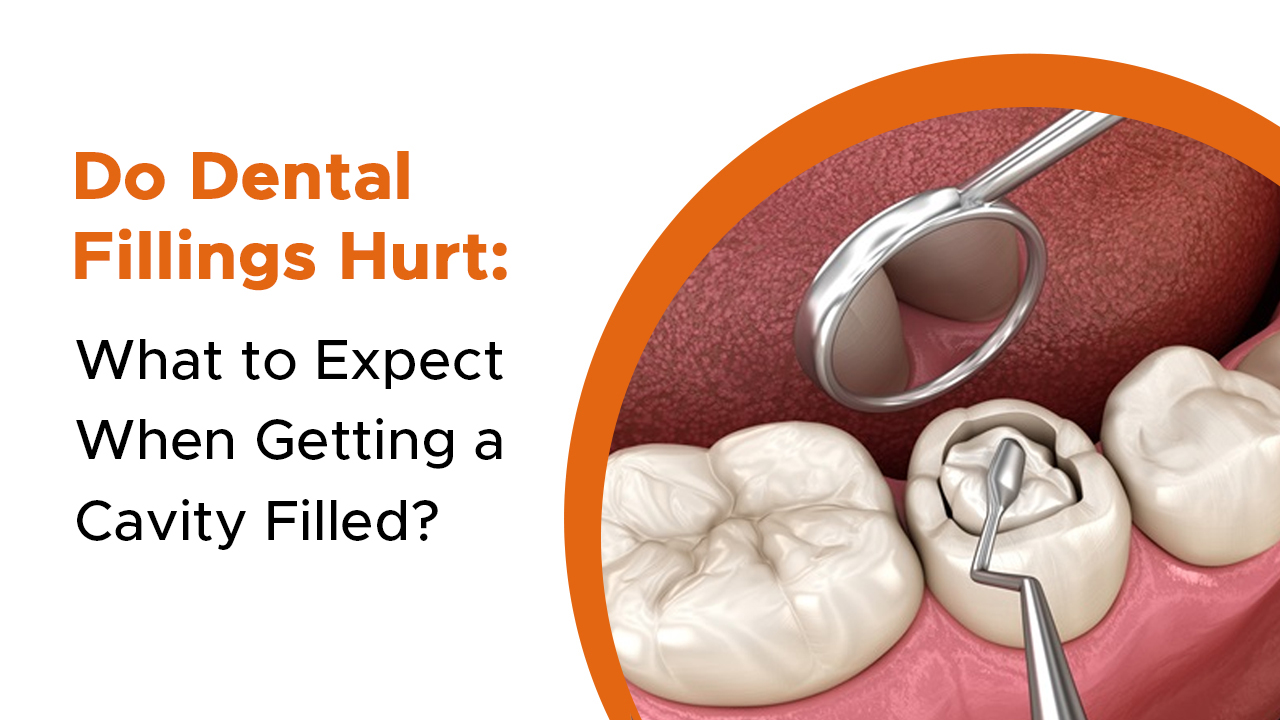
Tooth pain while chewing or sensitivity when you drink something cold can make even a small cavity feel stressful. What worries most people is not the cavity, but the question, “do dental fillings hurt?”
Dental fillings usually do not hurt because the tooth is numbed before treatment. You may feel pressure or vibration, but sharp pain during the procedure is not expected.
This guide explains Dental Fillings Hurt? What to Expect (Step by Step) so you know exactly what happens before, during, and after a filling. At Eledent Dental Hospital, the focus is on comfortable cavity treatment and early diagnosis, so small cavities are treated before they turn into painful root canal cases.
If you are planning a dental filling in Hyderabad, this blog will help you feel clear and prepared before your visit.
The Short Answer: Do Dental Fillings Actually Hurt?
Dental fillings do not hurt because the dentist numbs the area before removing decay. You may feel pressure, vibration, or water spray during the procedure, but you should not feel sharp pain.
Most people expect pain because they imagine old-style drilling. Modern dentistry, including local anaesthesia, better dental tools, and patient-friendly care make the process far more comfortable and painless.
What You Might Feel During the Dental Filling Procedure?
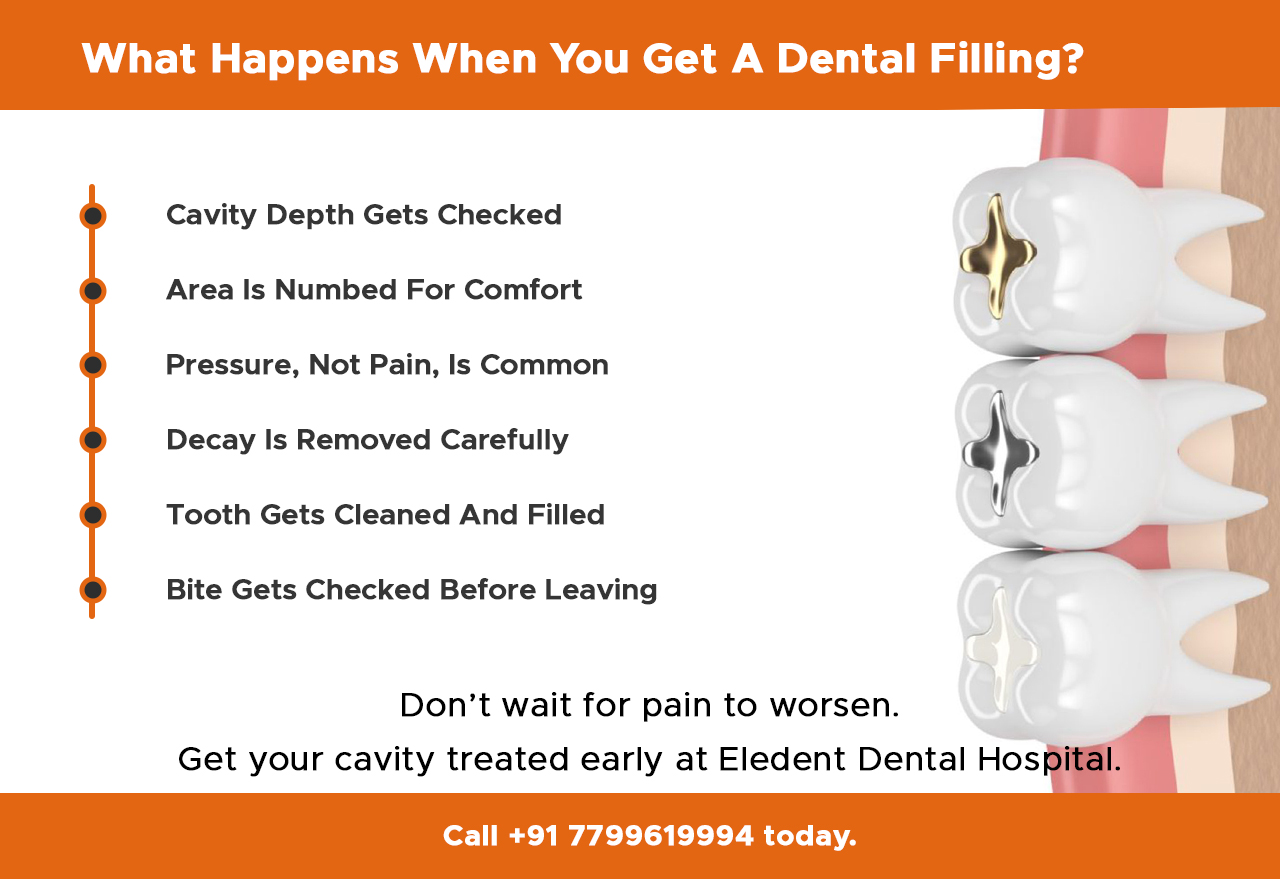
Here is what happens:
- Numbing: Quick pinch or slight sting sensation felt.
- Numbness phase: Lips, cheek, or tooth feels heavy and numb.
- Decay removal: Pressure, vibration, and drilling sounds may occur.
- Cleaning: Water spray and suction keep area clear.
- Filling placement: Mild pressure while material is shaped and placed.
- Bite check: Dentist checks bite using marking paper gently.
If you feel pain during any step, tell your dentist immediately.
Do You Always Need an Injection for a Filling?
Not all fillings require an injection. A small and shallow cavity may need little or no anaesthesia, while a deeper cavity needs numbing for comfort.
| Cavity Type | Injection Need |
|---|---|
| Very small surface cavity | May not be needed |
| Medium cavity | Dentist may suggest numbing |
| Deep cavity near nerve | Usually needed |
| Sensitive tooth | Numbing helps comfort |
| Anxious patient | Numbing can reduce fear |
Skipping numbing in a deep cavity can make the procedure uncomfortable. Your dentist will check cavity depth before deciding whether you may need an injection during the dental filling procedure or not.
Patients looking for dental filling in Kondapur should ask whether their cavity is shallow or deep during the first consultation.
What Changes Right After the Filling?
After a filling, numbness and mild sensitivity are common for a few hours. The numb feeling reduces as the anaesthesia wears off. You may notice:
- Numb lips or cheek for 2 to 4 hours.
- Mild soreness near the treated tooth.
- Slight sensitivity to cold food or drinks.
- A different bite feeling for some time.
- Risk of biting your cheek while numb.
Avoid chewing until normal feeling returns. Choose soft food if you feel tenderness after treatment.
Is Sensitivity After a Filling Normal Or Something To Worry About?
Mild sensitivity after a filling is normal and settles within a few days. Sensitivity can happen because the tooth adjusts after decay removal and filling placement.
| Symptom | What It May Mean |
|---|---|
| Cold sensitivity | Common after filling |
| Mild pressure while biting | May settle in a few days |
| Sensitivity in deep cavity | Tooth may need more time |
| Sharp pain while chewing | Bite may need adjustment |
| Pain lasting beyond 10 to 14 days | Dentist review needed |
If sensitivity keeps increasing, do not ignore it. A quick check can prevent bigger problems.
Why Your Tooth Might Feel “High” After a Filling?
If your bite feels uneven after a filling, the filling may need a quick adjustment by your dentist. This is called a “high filling.” A high filling can feel like:
- One tooth touches first while biting
- Pain when chewing on that side
- Pressure in the filled tooth
- Jaw discomfort after meals
This is easy to fix. Your dentist can polish or adjust the filling surface in a few minutes. Ignoring it can strain the tooth and cause lasting discomfort.
When a Simple Filling Might Turn Into Something Bigger?
If a cavity is too deep, a filling may not be enough and root canal treatment may be required. This happens when decay reaches the inner nerve area of the tooth.
Early cavities stay in the outer tooth layers. Deep cavities move closer to the pulp. Once bacteria reach the pulp, you may feel severe pain, swelling, or lingering sensitivity.
People searching for dental filling in Kukatpally should not wait until pain becomes constant. Early filling can save tooth structure and reduce treatment complexity.
What You Should Know Before You Go For a Filling?
Knowing a few key things before your appointment can help you feel more prepared and comfortable. Most dental filling appointments are simple and short. Before your visit:
- Eat a normal meal unless your dentist says otherwise.
- Tell your dentist about allergies or medicines.
- Ask how deep the cavity is.
- Ask what filling material will be used.
- Tell your dentist if you feel anxious.
- Plan soft food for the first meal after treatment.
If you need a dental filling in Manikonda, use the consultation to understand the cavity depth and aftercare steps clearly. If you are considering dental fillings treatment in Kompally, choose a clinic that focuses on comfort, hygiene, and proper bite correction.
You Don’t Have to Fear a Simple Dental Filling and Delay It!
Delaying a dental filling can allow the cavity to deepen and may lead to more complex treatments like root canal. A small cavity today can become a painful problem later.
Here is the simple risk:
- Small cavity grows: More tooth structure gets damaged over time.
- Decay reaches nerve: Root canal treatment may become necessary.
- Tooth weakens: Risk of fracture increases significantly.
- Food keeps getting stuck: Decay can spread more quickly.
- Pain increases: Emergency dental care may be required.
Early filling saves time, discomfort, and natural tooth strength.
Get Comfortable Dental Filling Treatment at Eledent Dental Hospital
At Eledent Dental Hospital, dental fillings are done with a focus on comfort, precision, and early diagnosis. Patients get 19+ years of experience, specialist-led care, digital diagnostics, CBCT support, intraoral scanners, and multiple Hyderabad locations. If you need dental filling in Hyderabad, Eledent Dental Hospital helps you treat cavities before they turn painful.
Cavity pain or food getting stuck? Get comfortable dental filling treatment at Eledent Dental Hospital. Call +91 7799619994 today.
FAQs
Can I eat immediately after a filling?
You should wait until the numbness wears off before eating. Avoid chewing on the treated side for a few hours to prevent discomfort or damage.
How long does a dental filling last?
Dental fillings can last several years with good oral hygiene. Their lifespan depends on the material used, cavity size, and maintenance.
Why does my tooth hurt when I bite after a filling?
This may be due to a high filling or temporary sensitivity after treatment. If pain persists, a simple dental adjustment usually resolves it.
Are white fillings better than silver fillings?
White fillings are more aesthetic and blend with natural teeth, especially in visible areas. Your dentist will recommend the best option based on your case.
Can a cavity come back after filling?
Yes, new decay can form around a filling if oral hygiene is poor. Regular brushing, flossing, and dental visits help prevent recurrence.
Leave a Reply